

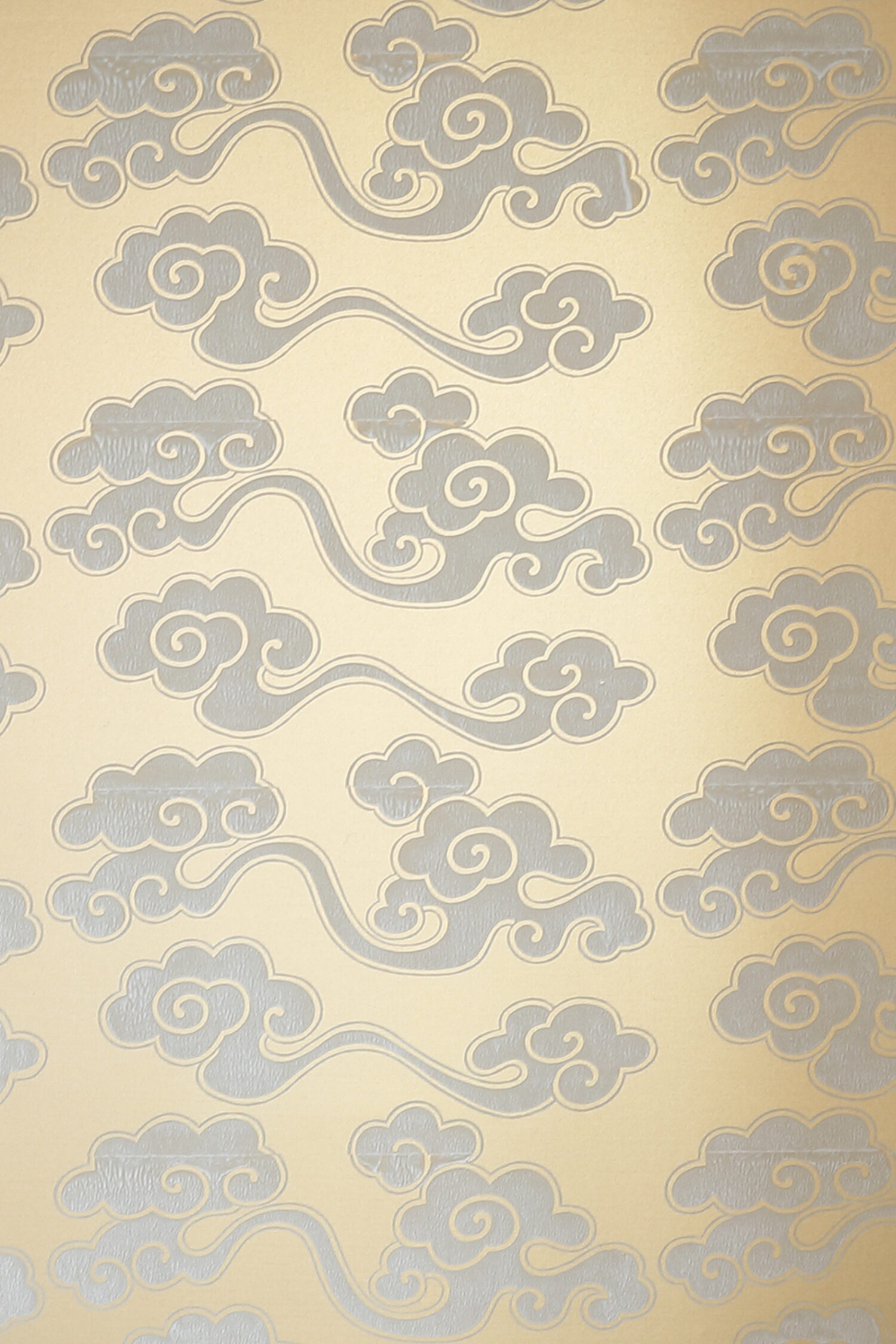
The Karakami Paper of Karacho
Karacho was founded in Kyoto in 1624 (the first year of the Kan’ei era).
For over 400 years since the Edo period, it has continued without interruption as the last remaining karakami atelier.
Today, the 13th generation is led by karakami artist Choemon Senda and Aiko Senda, who carry forward the history, tradition, and cultural legacy of Karacho in Saga (Arashiyama), Kyoto.
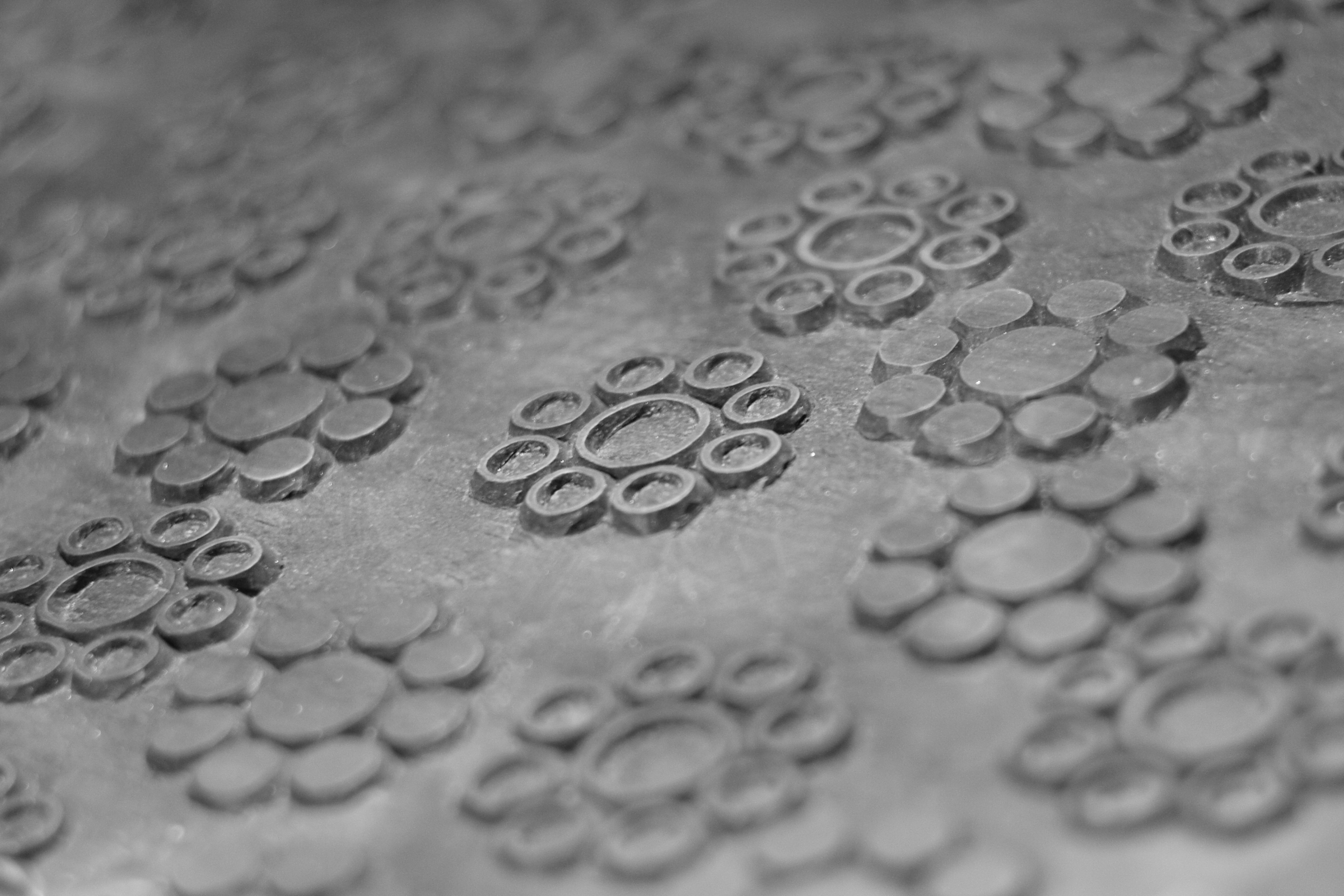
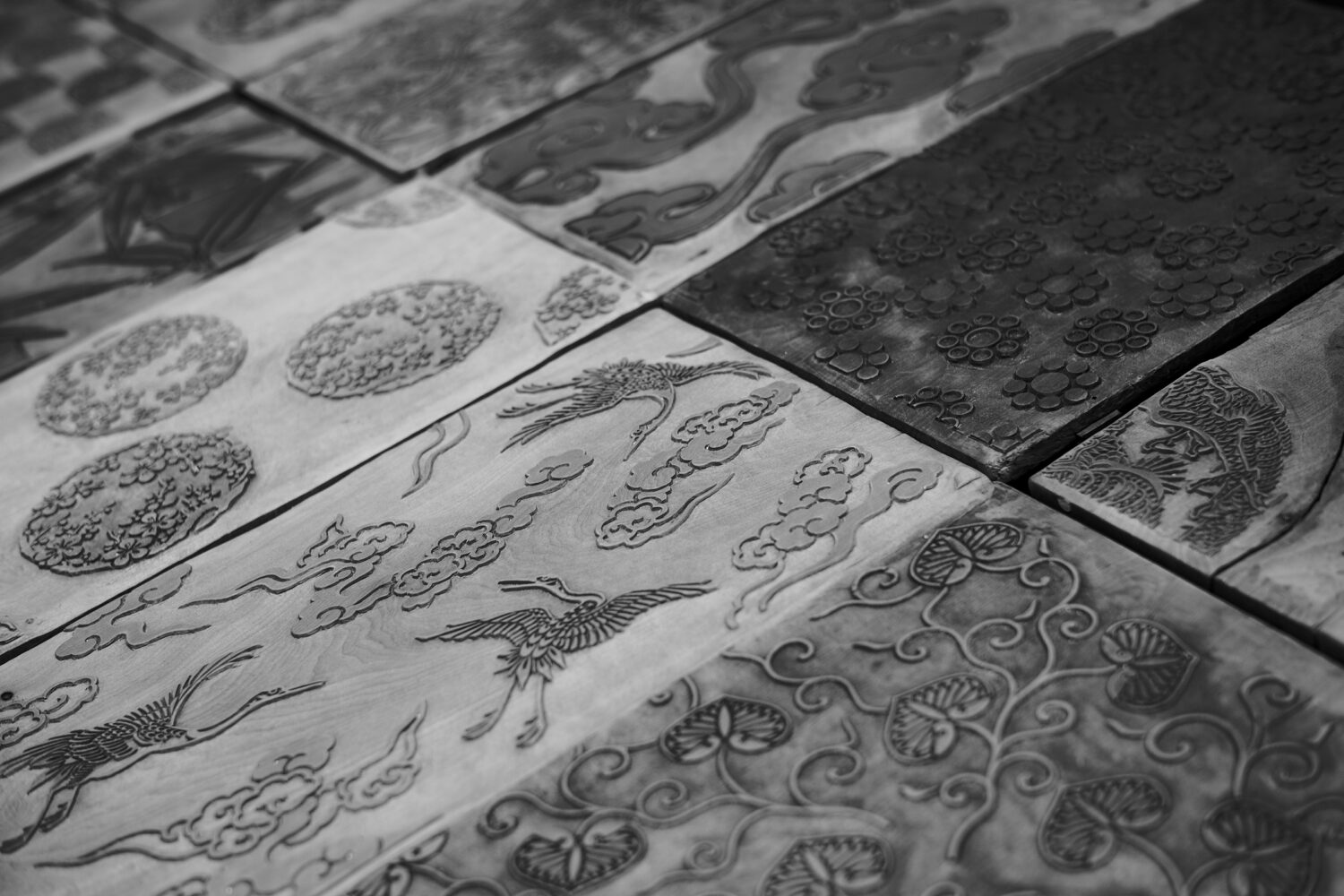
Karacho’s karakami is created using precious woodblocks passed down through generations.
Each pattern is carefully hand-printed onto washi paper, one by one.
These woodblocks—miraculously preserved across centuries—are believed to hold an unseen, mysterious presence.
From them emerge karakami works imbued with a quiet yet powerful spirit, resonating deeply with people and continuing to captivate the human heart.
Karakami is a traditional decorative paper, primarily used for sliding doors (fusuma) and wall surfaces.
Since the Edo period, Karacho has undertaken works for historic sites such as the Kyoto Imperial Palace, Katsura Imperial Villa, Shugakuin Imperial Villa, and Nijo Castle.
Today, its works can be found not only in residences, but also in temples and shrines, public and commercial spaces, and hotels.
Its aesthetic vision and sense of beauty can be regarded as a cultural treasure that Japan proudly shares with the world.
At the same time, Choemon Senda of Karacho is pioneering a new path by reinterpreting traditional karakami as contemporary art.
His works, known as “Totoblue”, are presented internationally and are recognized as spiritual artworks imbued with poetic sensibility.
In addition, under the current 13th-generation leadership of Choemon Senda and Aiko Senda, Karacho has expanded its vision through collaborations beyond washi, working with diverse materials and partners.
Guided by a unique aesthetic, they propose new ways of experiencing time and space across ways of living.
Through the beauty of pattern and color, they continue to create works that enrich people’s lives.
In this way, the current 13th-generation leadership of Karacho upholds three core concepts:
・Traditional karakami
・Contemporary art
・The world of pattern and color
These three pillars connect and sustain the evolving world of Karacho across 400 years.
The History of Karacho
Karacho was founded in Kyoto in 1624. It is the only karakami studio to have continuously carried on the techniques and traditions of karakami paper over the last four centuries. Karacho’s first studio master, Choemon, was originally a samurai warrior from the north. As a warrior, he was tasked with guarding the palace of a retired emperor, but he renounced his samurai status to become a karakami-shi (a karakami craftsman). While working with Honami Koetsu, who established an art village, he also got involved in the production of the Saga books (Sagabon), together with Suminokura Soan and Koetsu, who lived in Saga. Choemon’s descendants inherited and carried on his work with karakami paper. In 1681, while Choemon was still alive, the third studio master took up his residence in Higashinoto-in Sanjo-sagaru, and for the next three centuries and 10 generations of studio masters, up until 1970, Higashinoto-in served as Karacho’s production base.
We relocated our base from Shugaku-in to Saga (Arashiyama), Kyoto in 2022, where we have carried on our mission of preserving and passing on the karakami culture.
What is Karakami Paper?
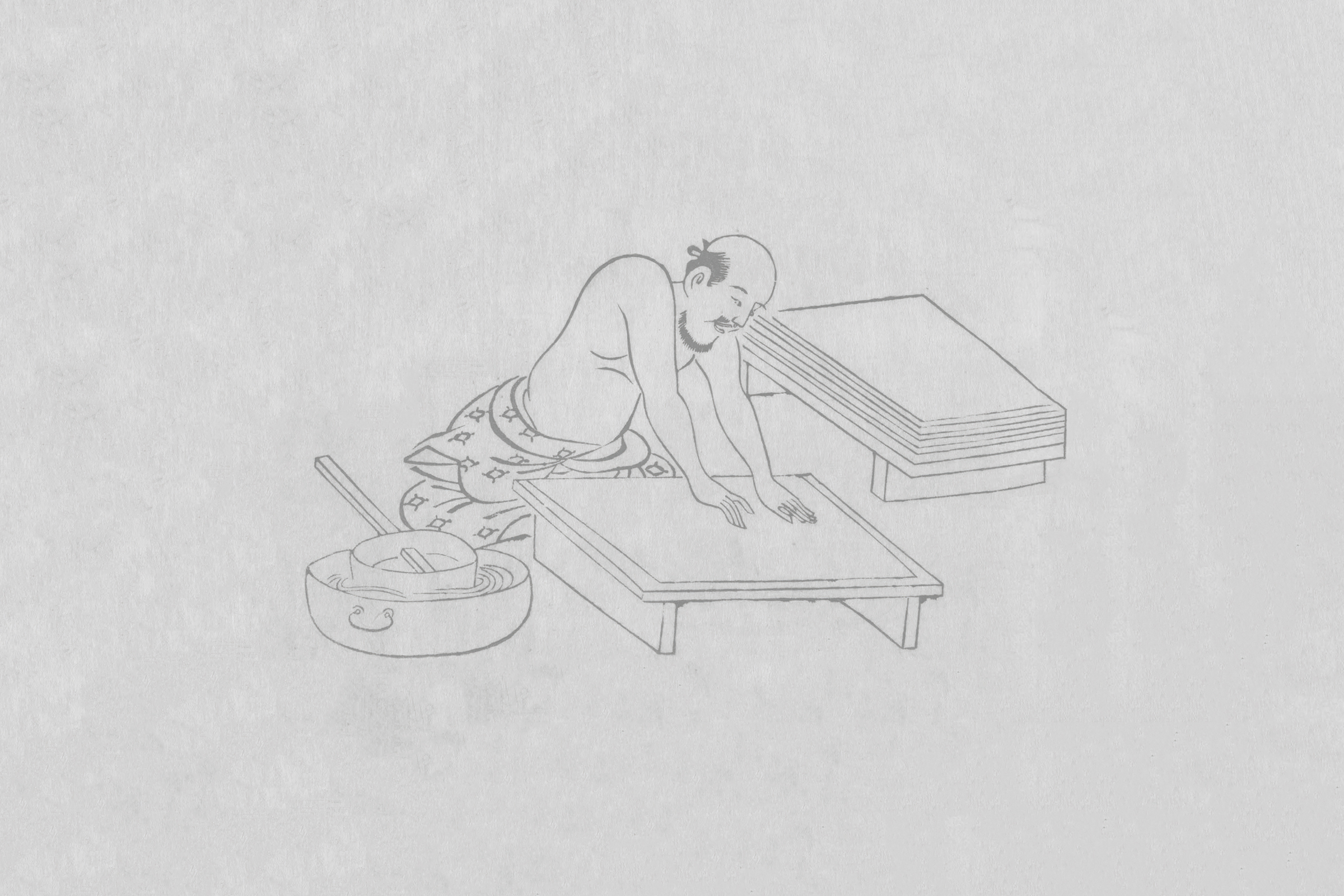
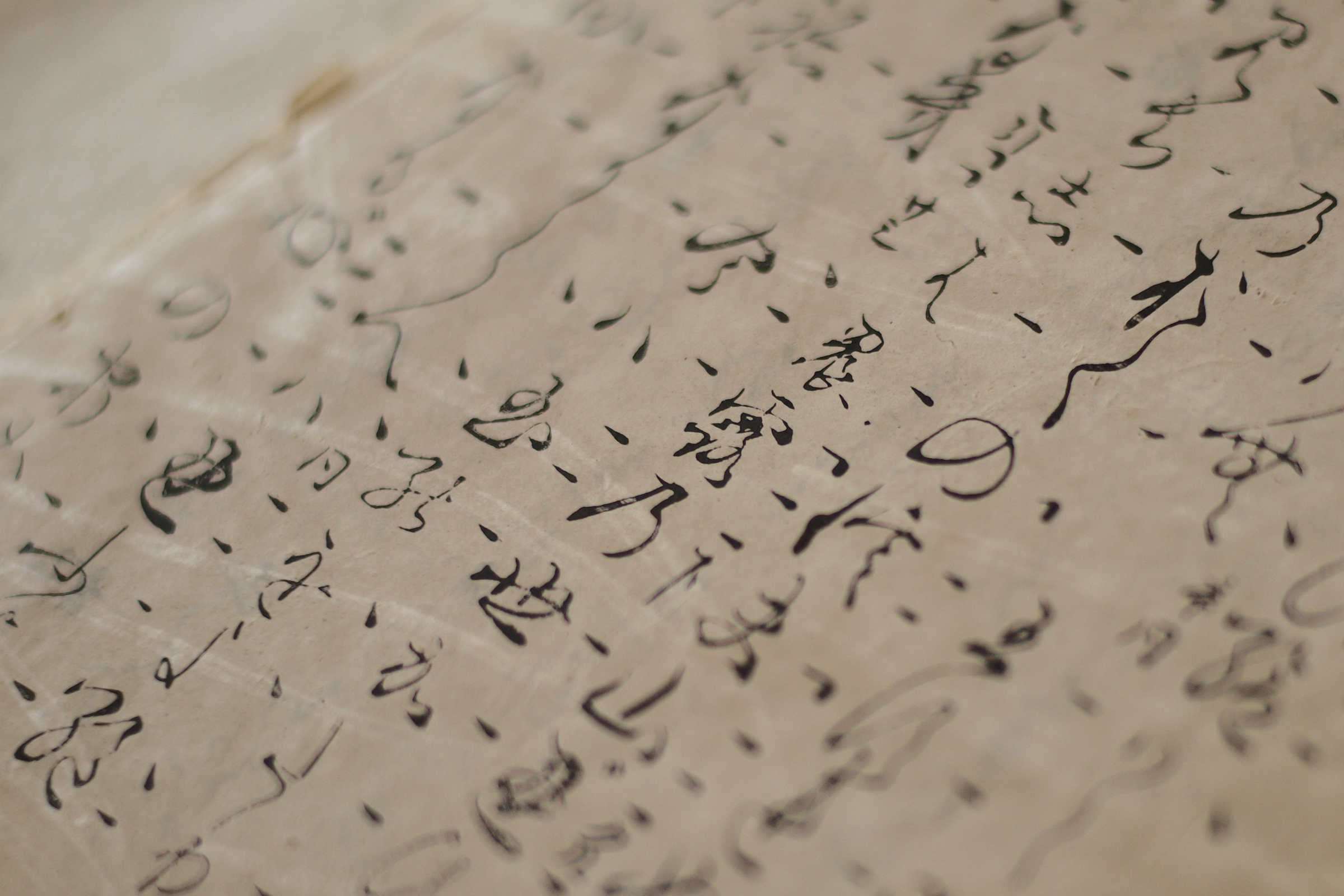
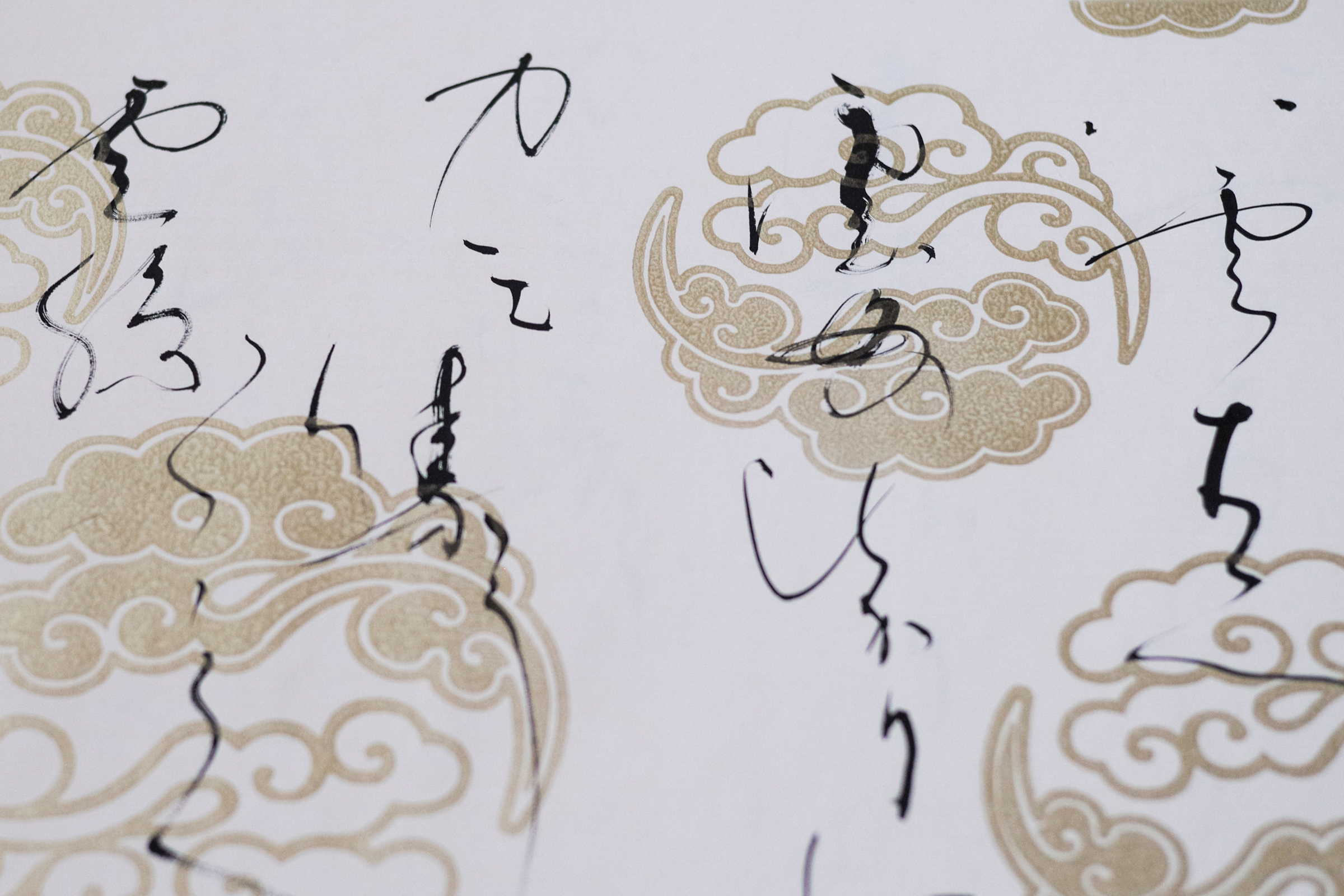
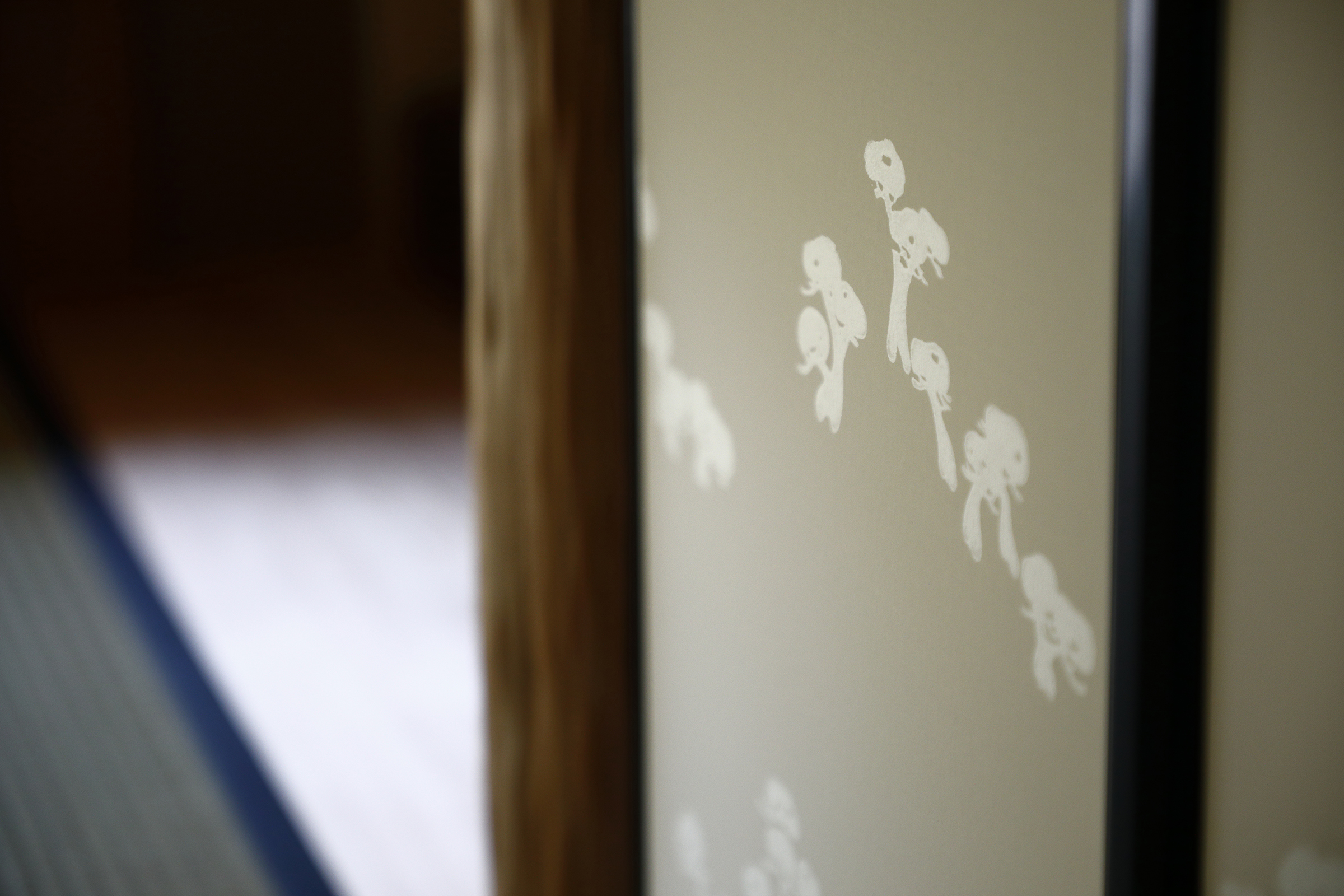
Karakami is the beautiful decorative paper made by using woodblocks to hand-print patterns onto Japanese washi paper. It is said to have originated in the Heian Period (794 – 1185) when it was used for writing poetry, and there are descriptions of karakami paper in texts from the period such as The Pillow Book and The Tale of Genji.
As architectural styles changed in the Kamakura (1185 – 1333) and Muromachi (1336 – 1573) periods, karakami began to be used for interior decorations such as partitions (tsuitate), byobu folding screens, fusuma sliding doors, and wallpaper. During the Edo Period (1603 – 1867), the use of karakami developed into a culture widely appreciated not only by shrines and temples, but also by samurai warriors, the court nobility, merchants, tea masters, and others.
The beauty of the shades of karakami paper is worthy of special mention, and the Kokinwakashu and Sanjurokkasen, which were made using techniques such as kirabiki and kirazuri, have transcended the ages as treasures of Dynastic Period (8th – 12th centuries) art and shining examples of Japanese beauty.
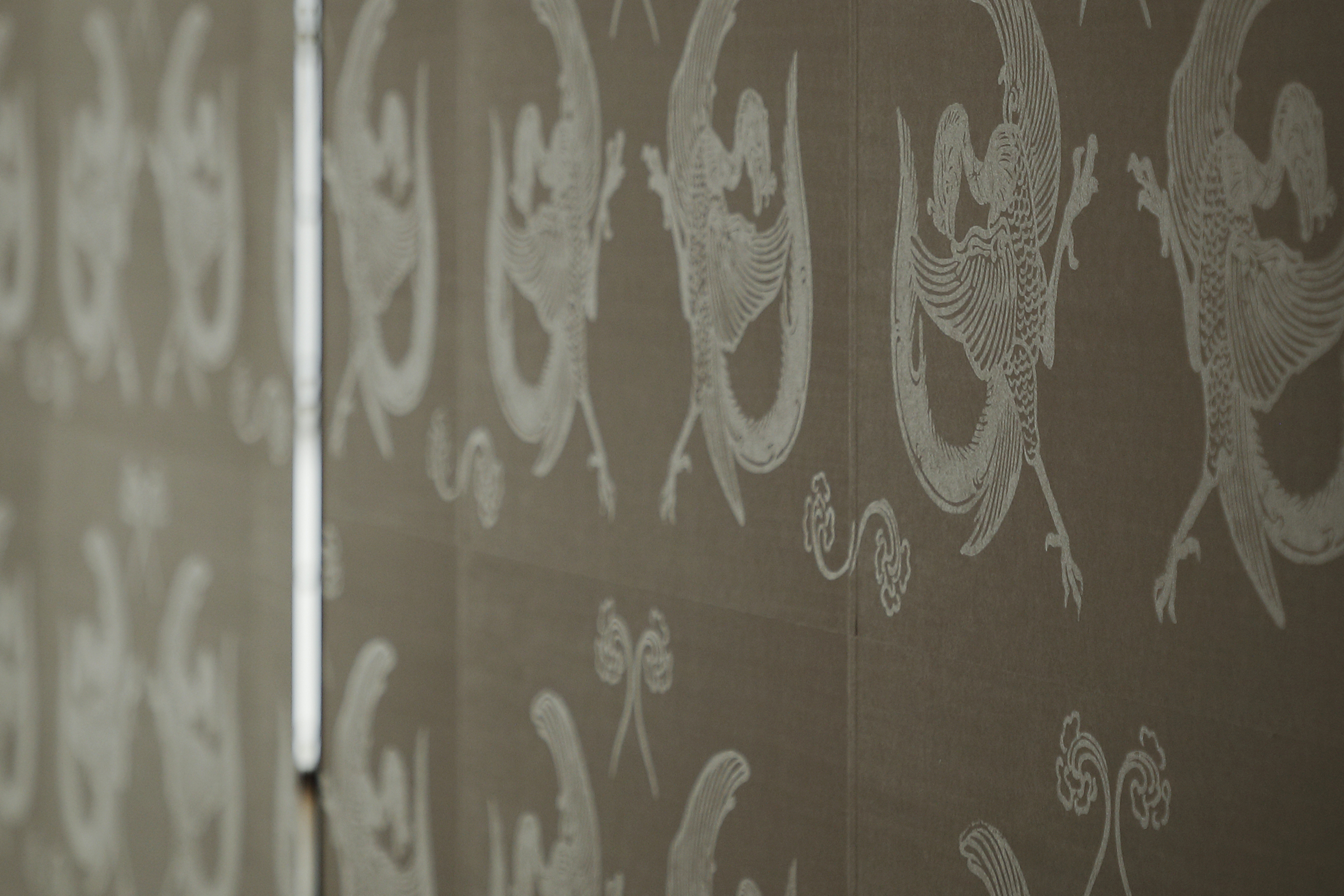
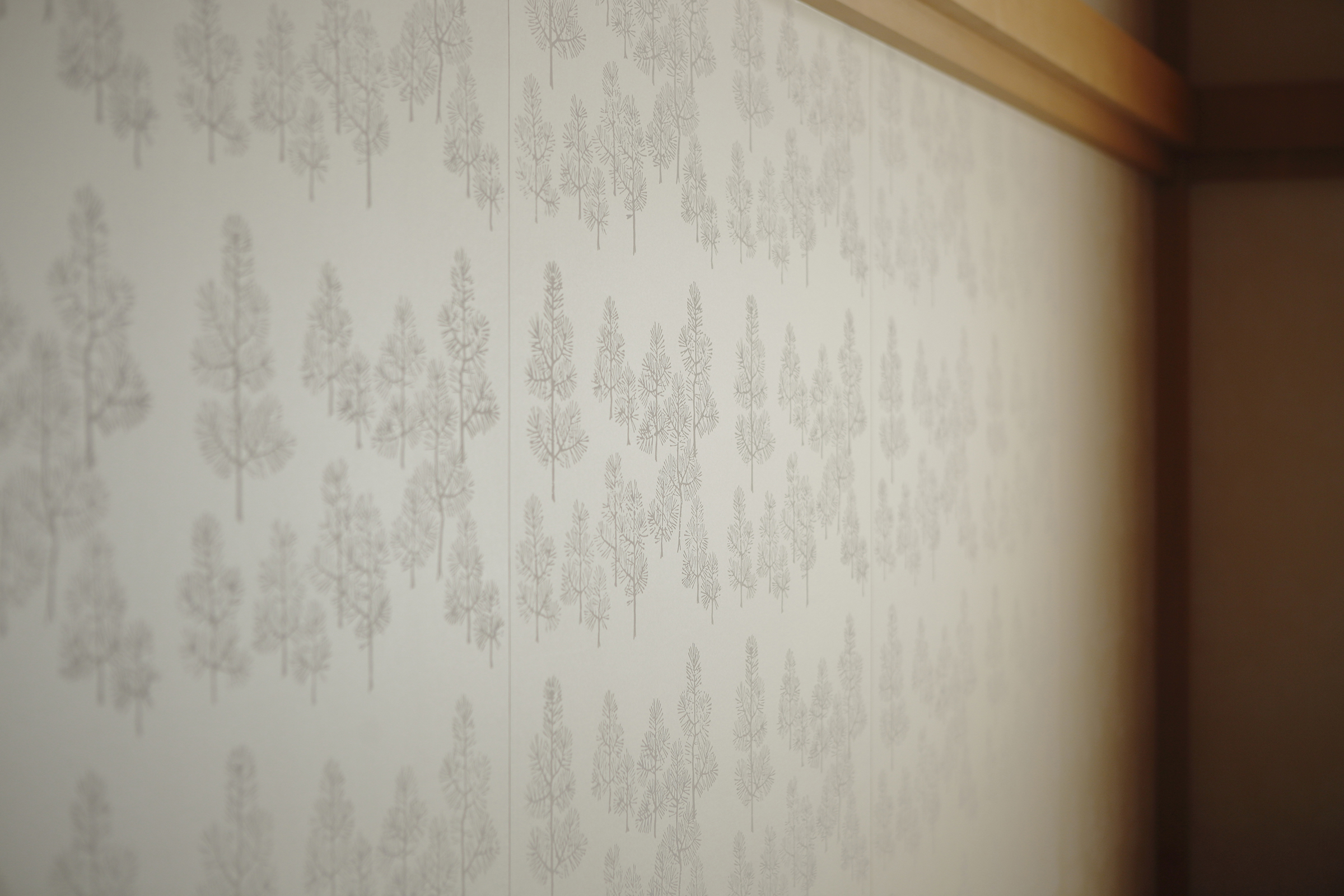
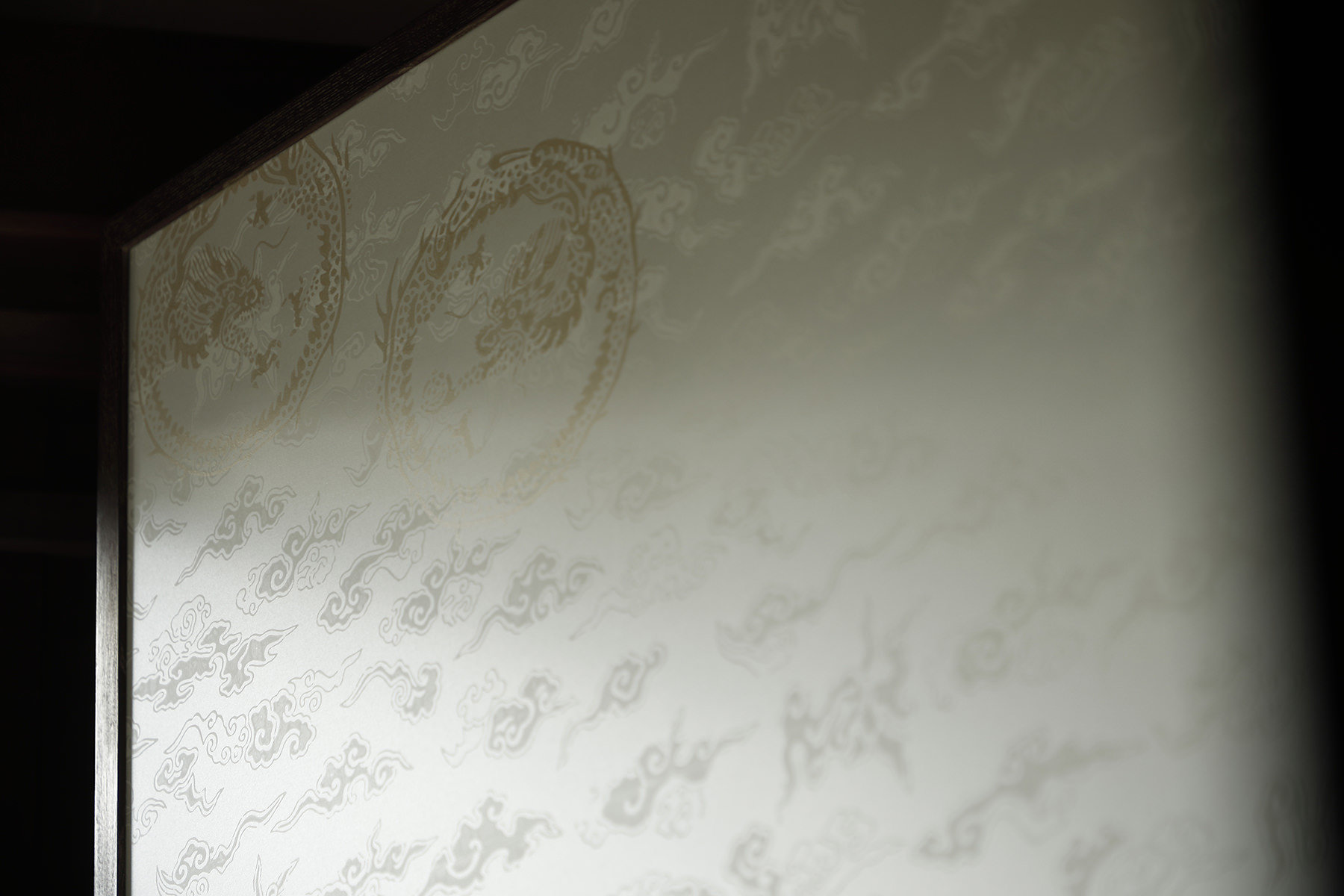
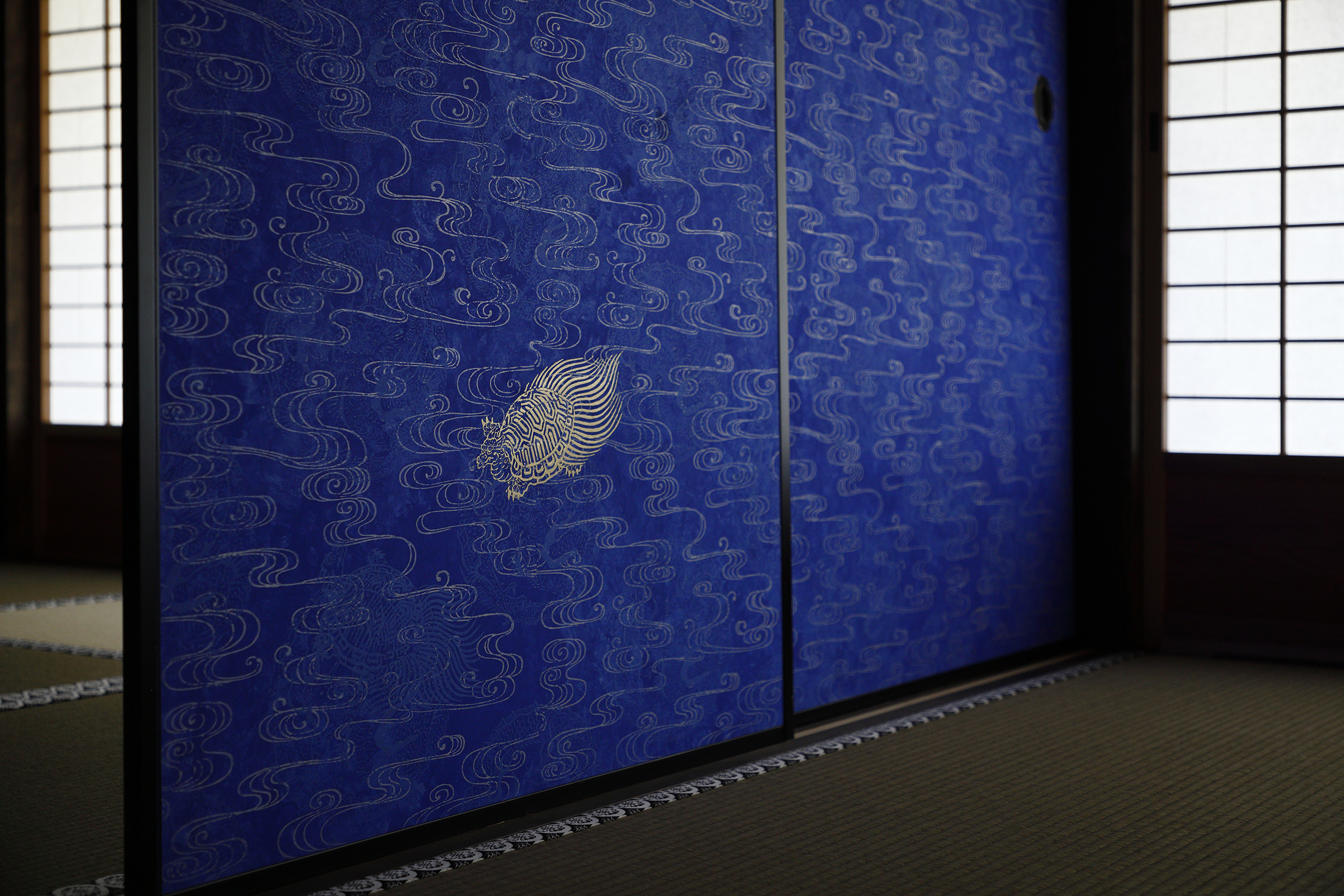
600 Woodblocks Handed Down Through Generations
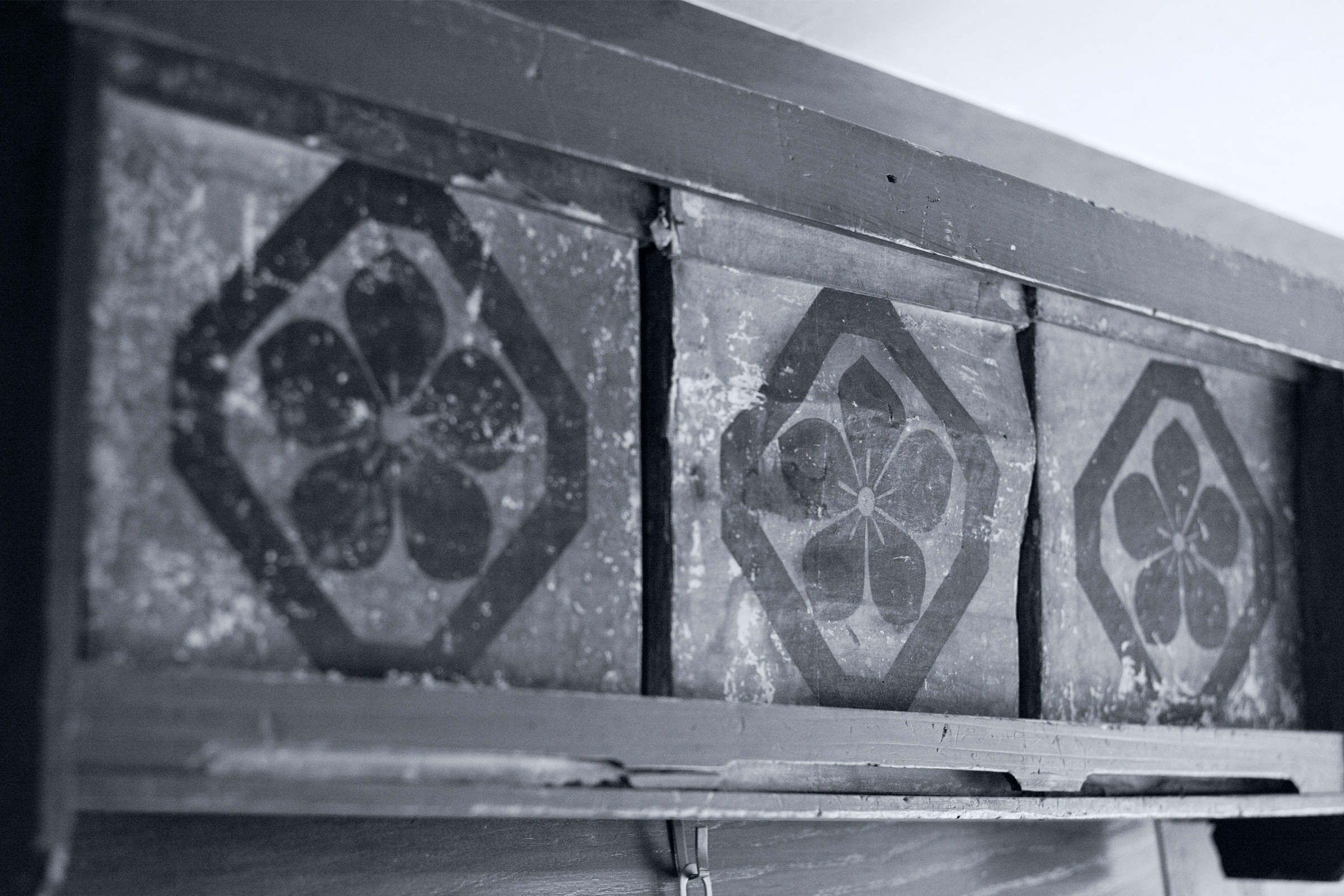
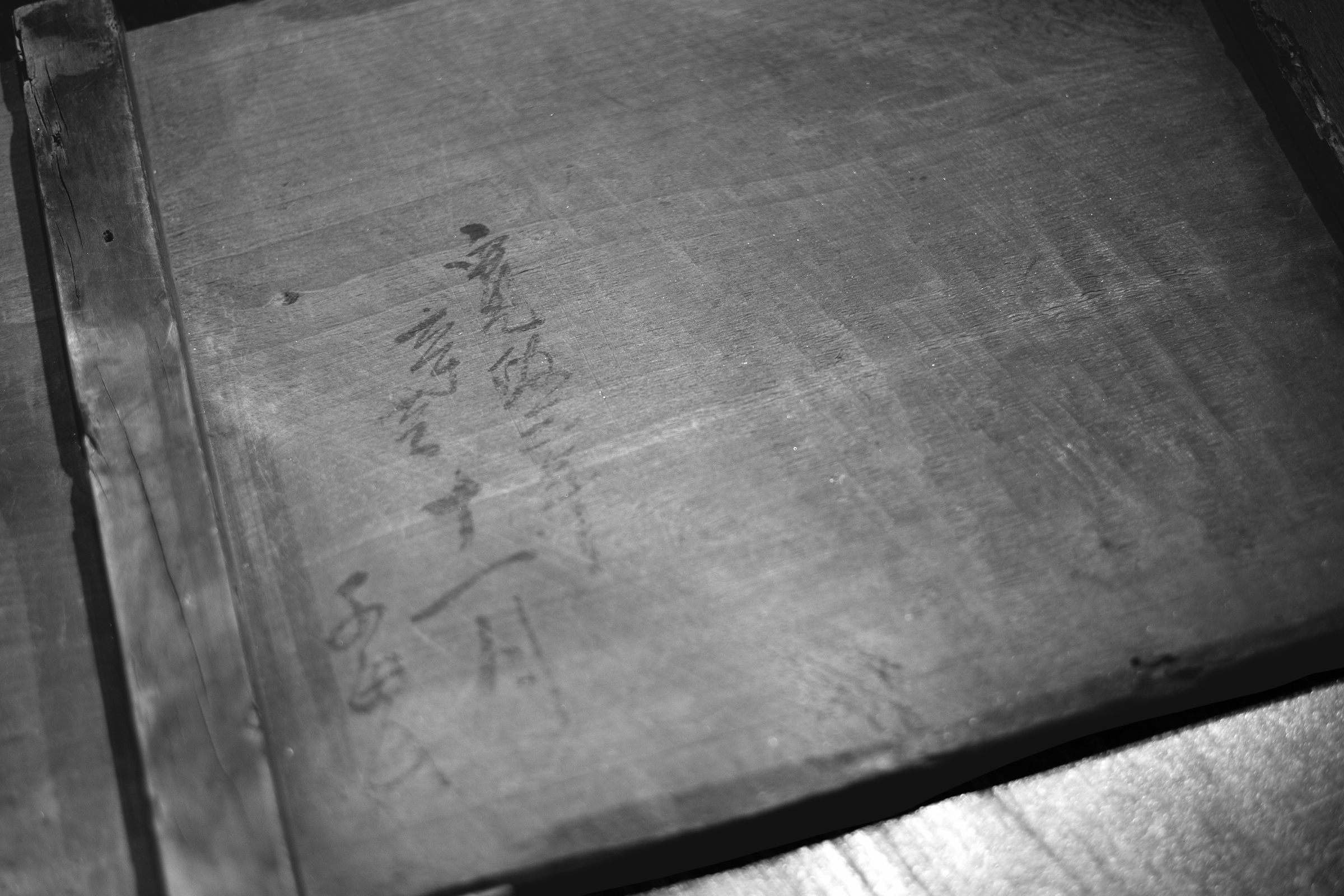
More than 600 woodblocks have been handed down over the many generations of Karacho’s karakami makers. A large fire destroyed most of the woodblocks in 1788, but the studio continued to operate while running other businesses, such as a medicine wholesale store, and the woodblocks were remade. A precious woodblock carved immediately after the great fire remains to this day, with the inscription “11th month of the third year of Kansei” (1791) written on the back in ink. According to old documents, 13 karakami studios existed in Kyoto around 1839. Many of their woodblocks were destroyed by fire in the Hamaguri Gate Rebellion of 1864, but Karacho miraculously managed to protect its woodblocks from the infernal violence, and they have been carefully passed down ever since as a legacy from the Edo Period (1603 – 1867), passing through many additional hardships of war and natural disasters along the way.
The First Karakami Studio,
Master Choemon, and the Saga Books
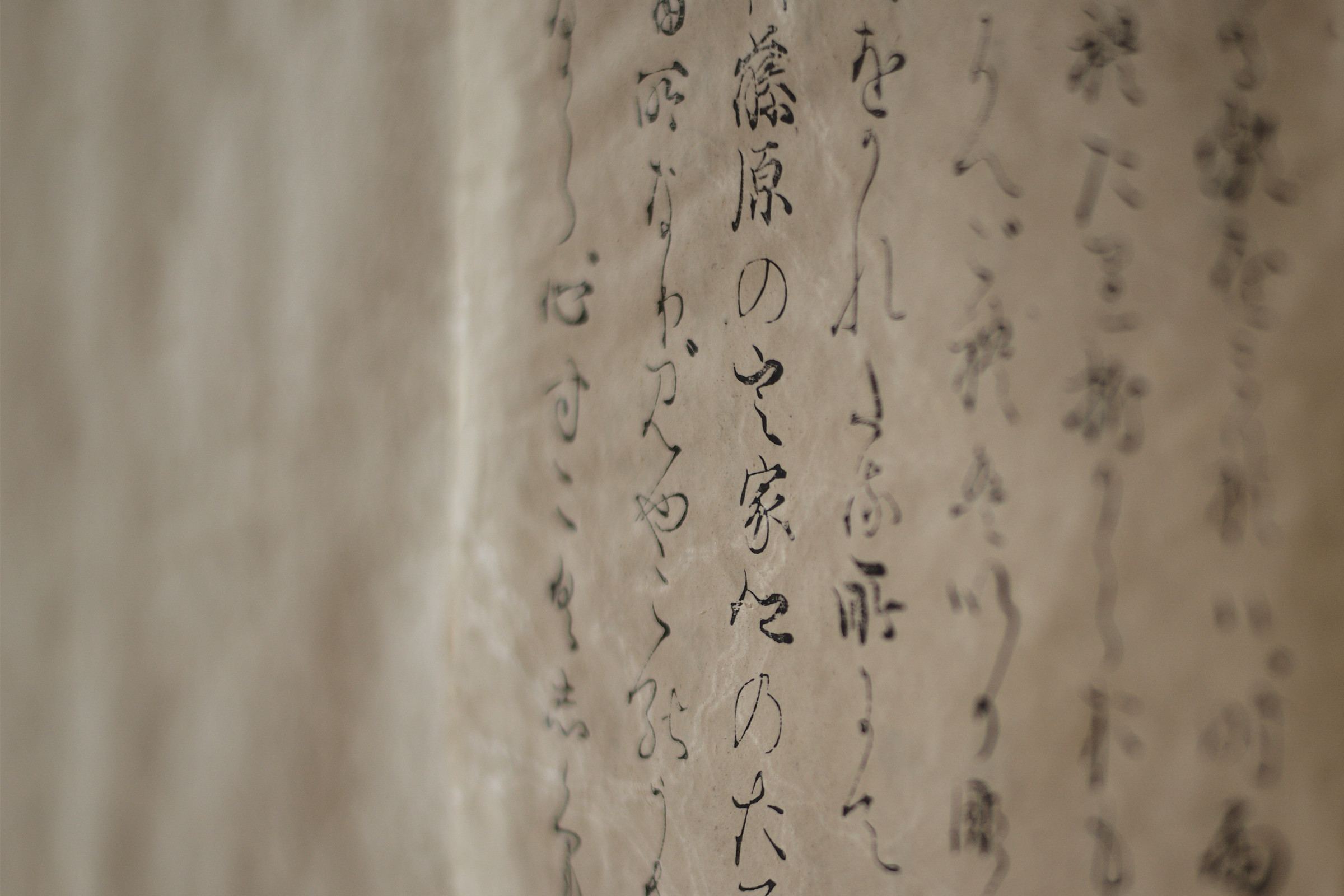
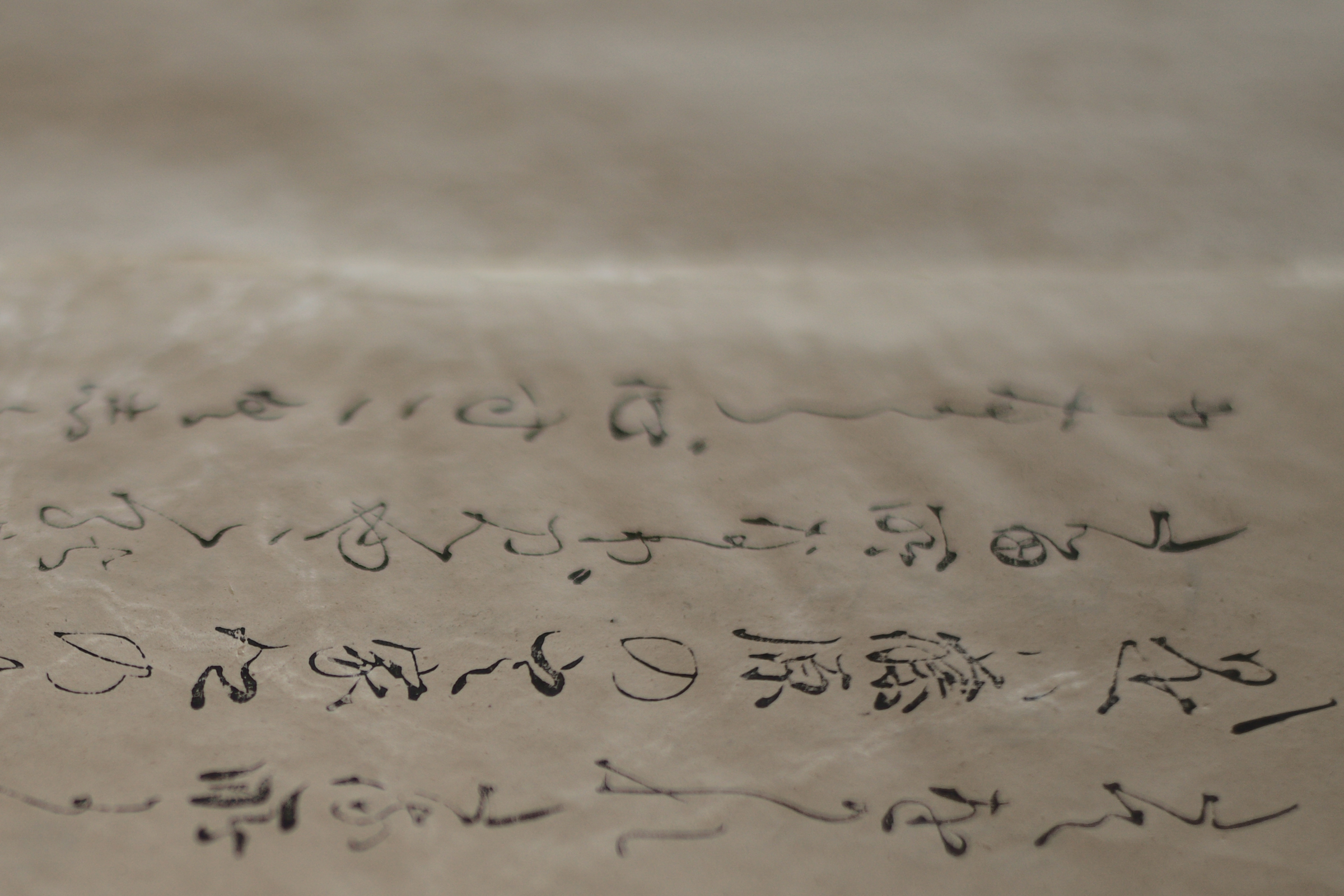
The Saga books (Sagabon), also known as the Koetsu books or Suminokura books, were published in Saga, Kyoto in the early Edo Period with the aim of reviving the culture of the Dynastic Period. The result of cooperation between Suminokura Soan, who contributed to the development of the economy and culture of the early modern period, Honami Koetsu, who was considered to be the founder of the Rimpa school of painting, and Tawaraya Sotatsu, the books are early examples of publications printed with movable type.
Characterized by the flowing elegance of the text and the shades of the karakami paper, the Saga books are considered the most beautiful books in the history of Japanese publishing. As a testing ground for original designs featuring waves, running water, bamboo, ivy, pampas grass, butterflies, and deer, the Saga books enabled the development of karakami culture to make dramatic leaps forward in terms of both quantity and quality. Both the first karakami studio master Choemon and Karacho are said to have been involved with these Saga Books.
Karacho, which passed down the karakami techniques developed in the production of the Saga books, still retains many of the patterns connected to Koetsu and the Rimpa school, and the making of karakami in Saga was a groundbreaking activity that influenced later generations. We also feel a mystical connection with the fact that the current Karacho is based in Saga.

Karakami-shi—The Artists/Craftsmen
Having inherited Karacho in Saga, Kyoto, karakami artists Choemon Senda (Toto Akihiko) and Senda Aiko have been sharing the beauty of karakami with the modern world in a continuation of the family business that has carried on for 13 generations.
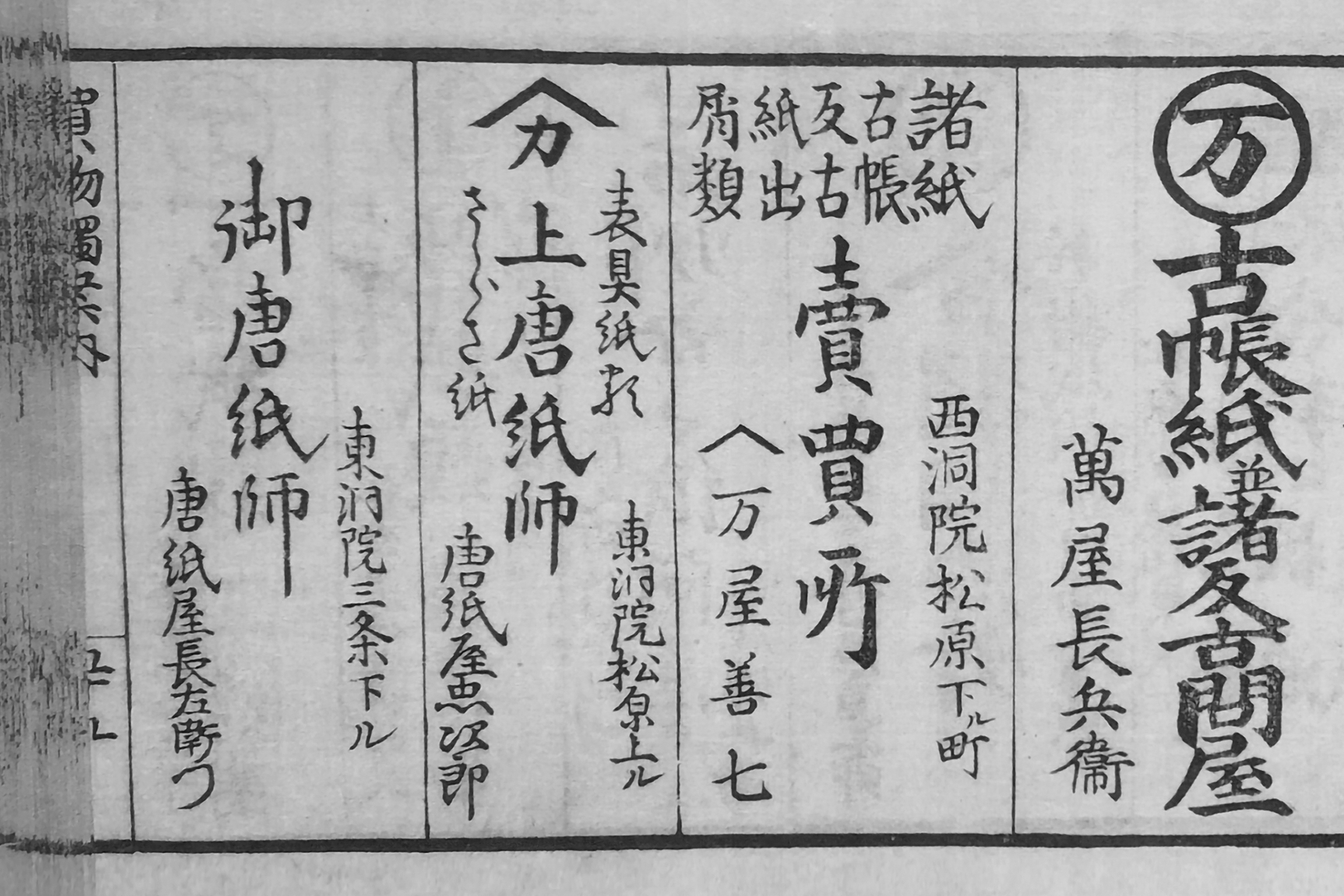
During the Edo Period, Karacho was based in the Higashinoto-in Sanjo area, where karakami craftsmen enthusiastically displayed their talents. Records from the Tenpo Era (1830 – 1845) show the names of 13 karakami studios, and a Kyoto shopping guide published in 1833 mentions three karakami craftsmen, only one of whom—the one from Karacho—received the honorific prefix “Go.”
Karacho maintained its position as Kyoto’s foremost karakami studio even in the Meiji Era (1868 – 1912) by protecting its woodblocks from the fires of the Hamaguri Gate Rebellion in 1864, and continued its work, including producing karakami for the Imperial Court. The market for karakami declined as Japan modernized and people’s lifestyles changed. Many karakami studios went out of business, and the names of karakami craftsmen faded away. Even in Karacho, the notation “karakami-shi” (karakami craftsman) gradually disappeared, but in July 2011, Choemon Senda (Toto Akihiko), who aims to restore karakami culture, restored the title with a new meaning of “karakami artist.”
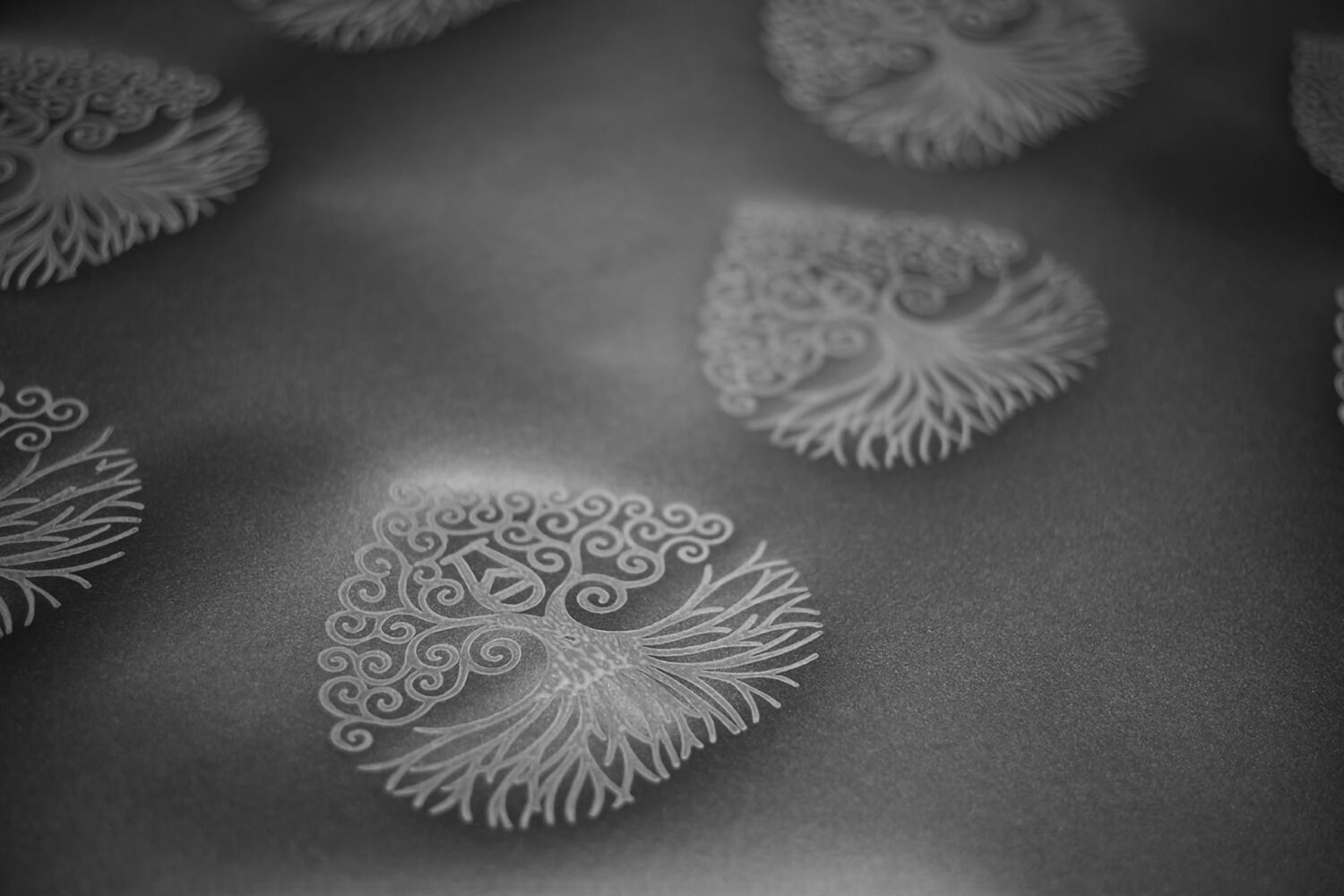
The Heisei Reiwa no Hyakumonyo Project
(the 100 Patterns of Heisei and Reiwa)
The Heisei Reiwa no Hyakumonyo Project (the 100 Patterns of Heisei and Reiwa) aims to create a history of tradition and succession—as well as circulation and rebirth—by spreading karakami culture and Japanese culture. It seeks to be a sustainable cultural project that will be meaningful to Kyoto 100 years from now. We believe that tradition is not only about inheriting the past. True succession can only come about if one plants seeds for the future. We are working with various creators and brands to create 100 new woodblock pieces to add to the 600 woodblocks that we have received from past generations. Each one of these new contributions will tell a story of our prayers and wishes for the present.