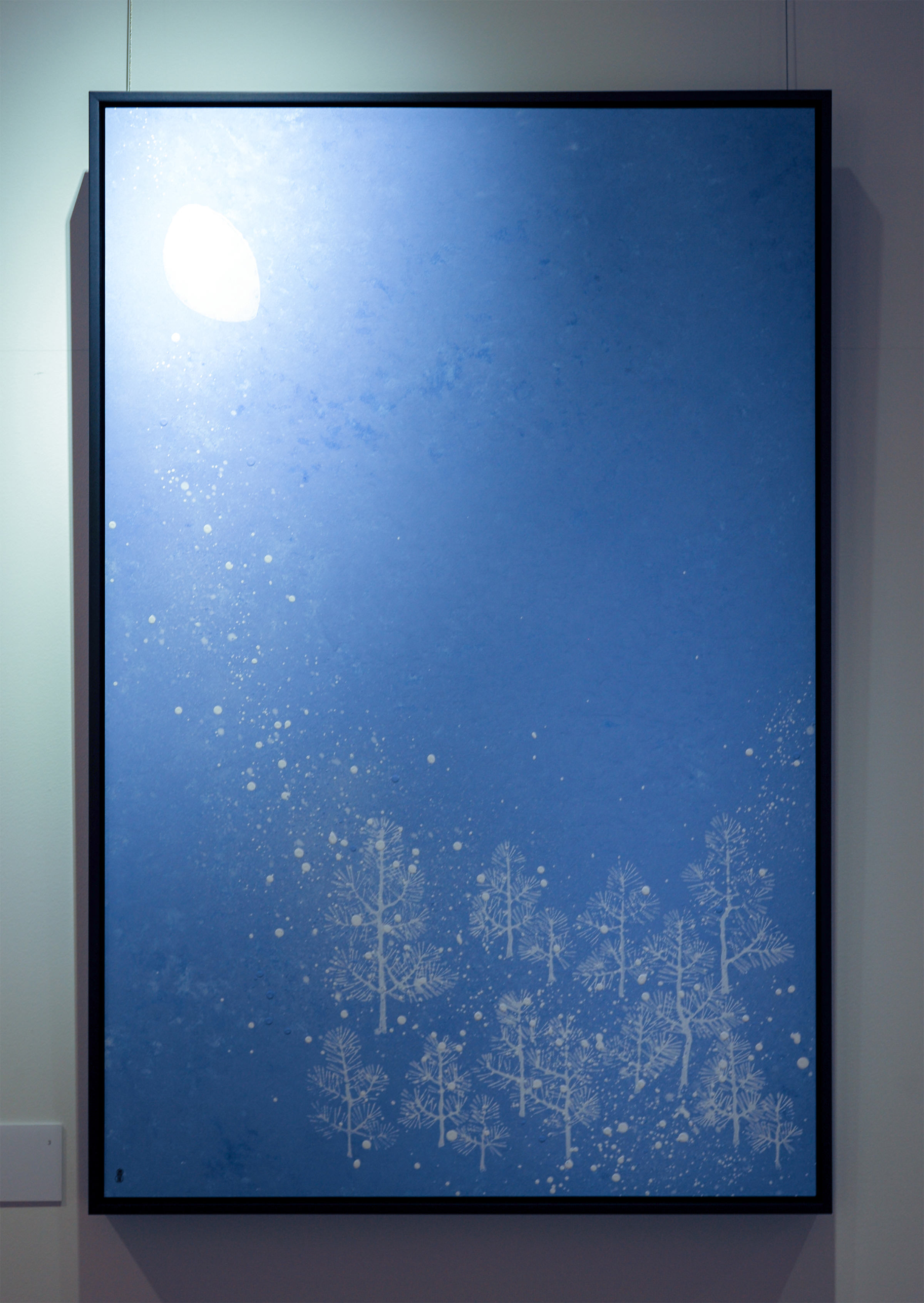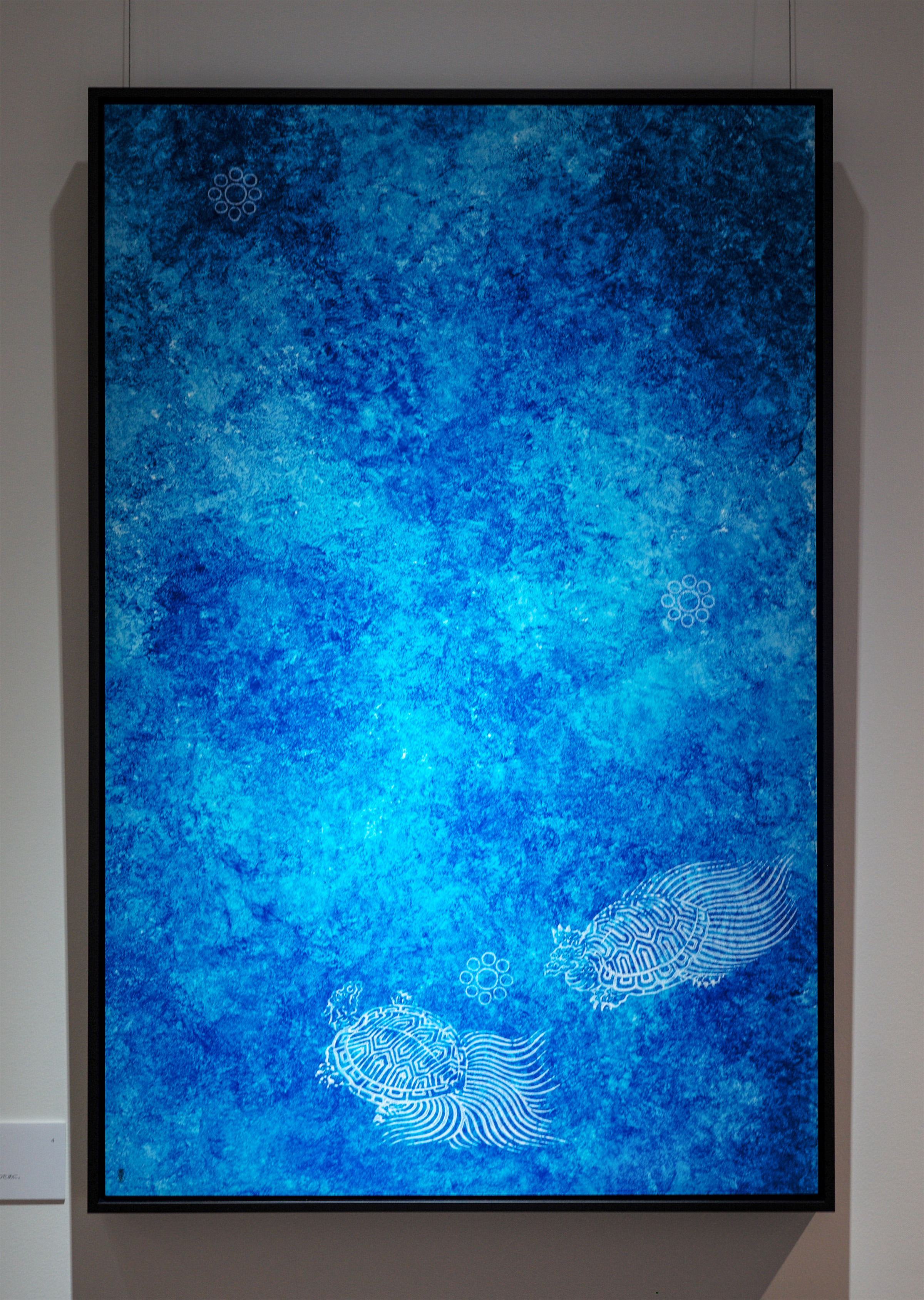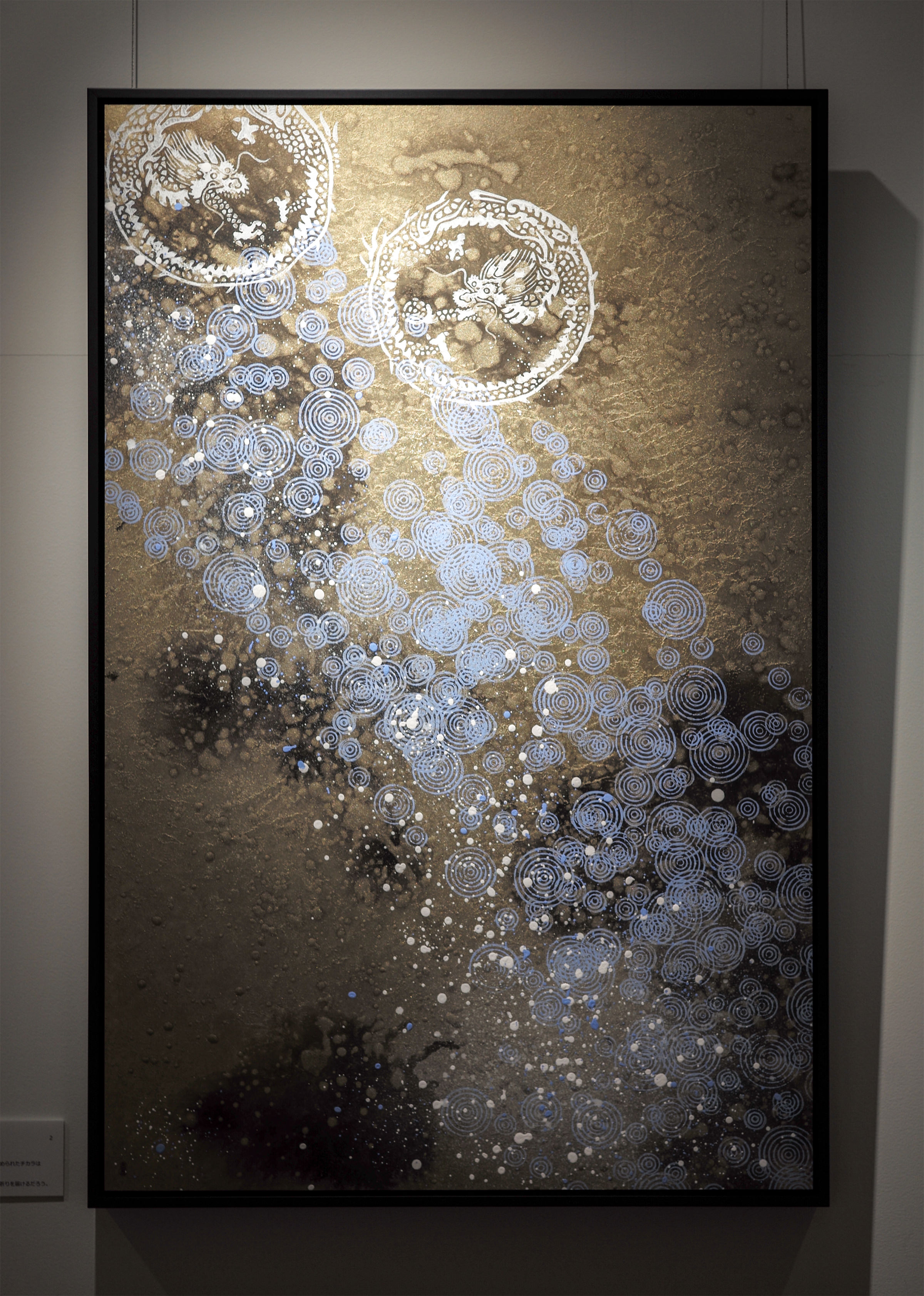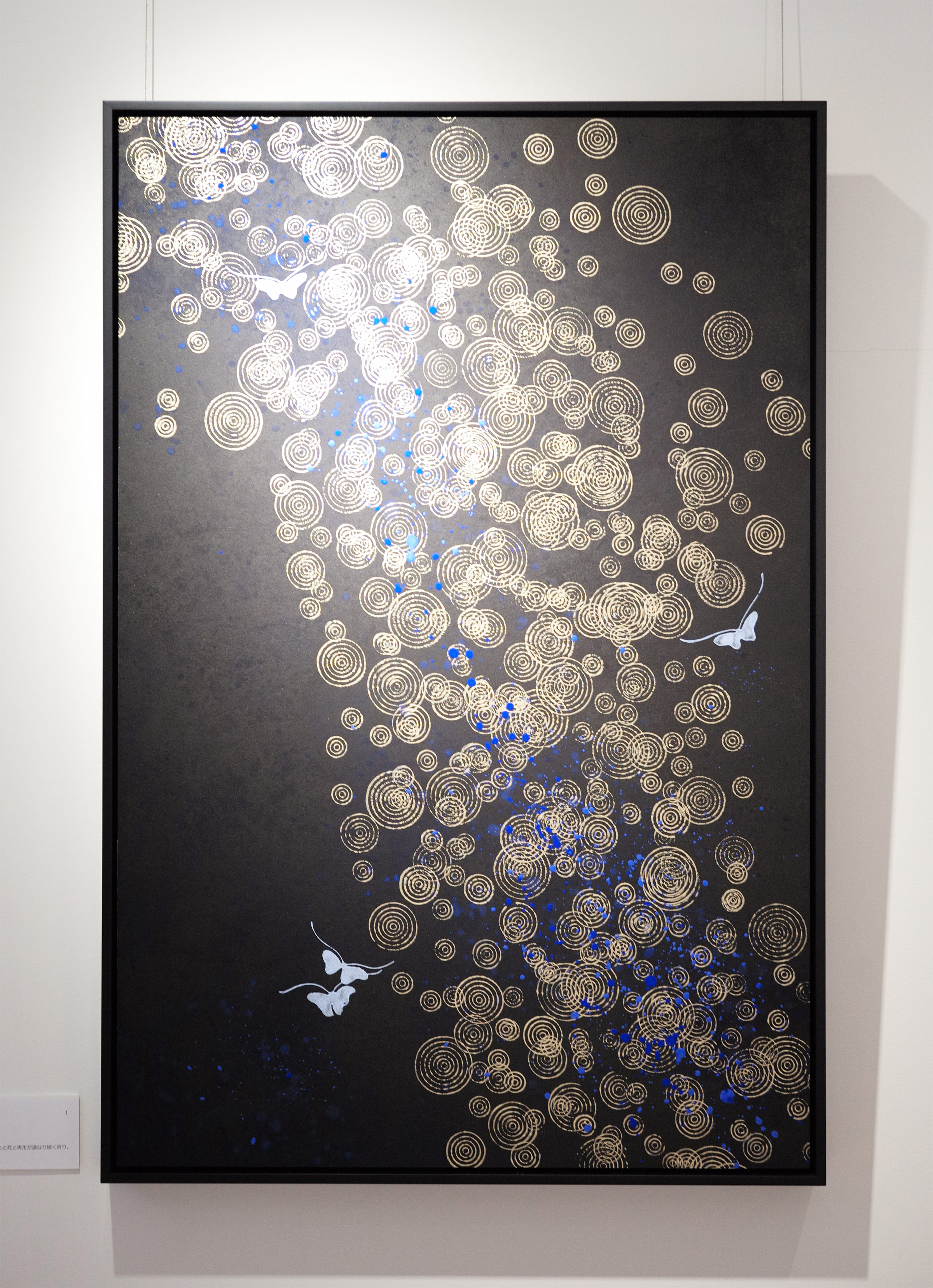
About Totoblue
Karakami Art
BLUE Art by Choemon Senda(formerly Toto Akihiko)
Sacred Blue of Prayer
Blue artworks dedicated to prayers for world peace.
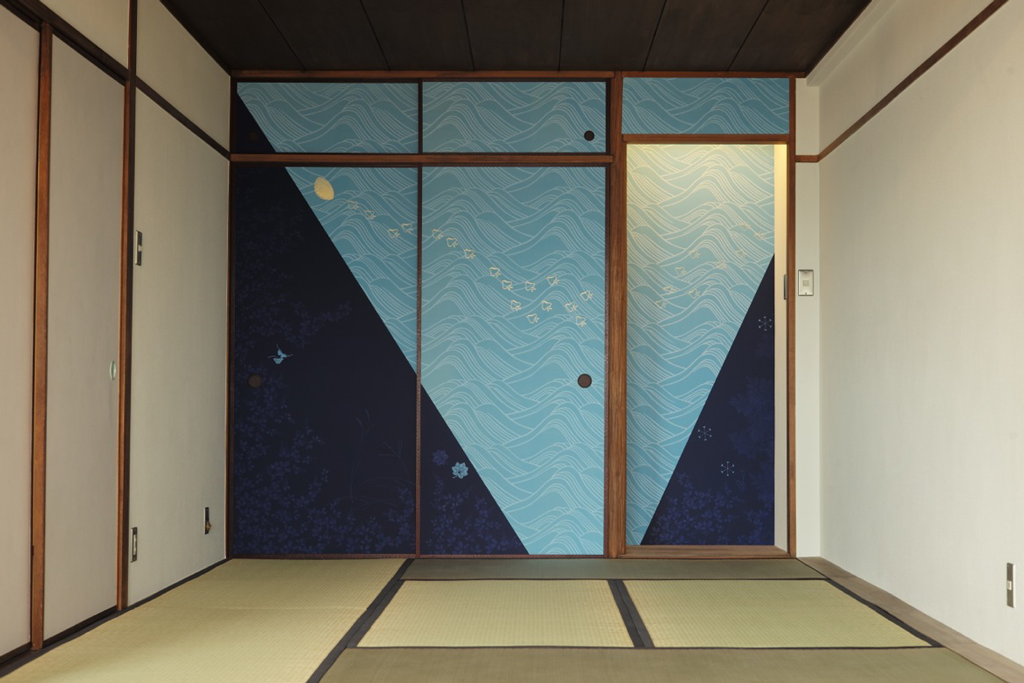
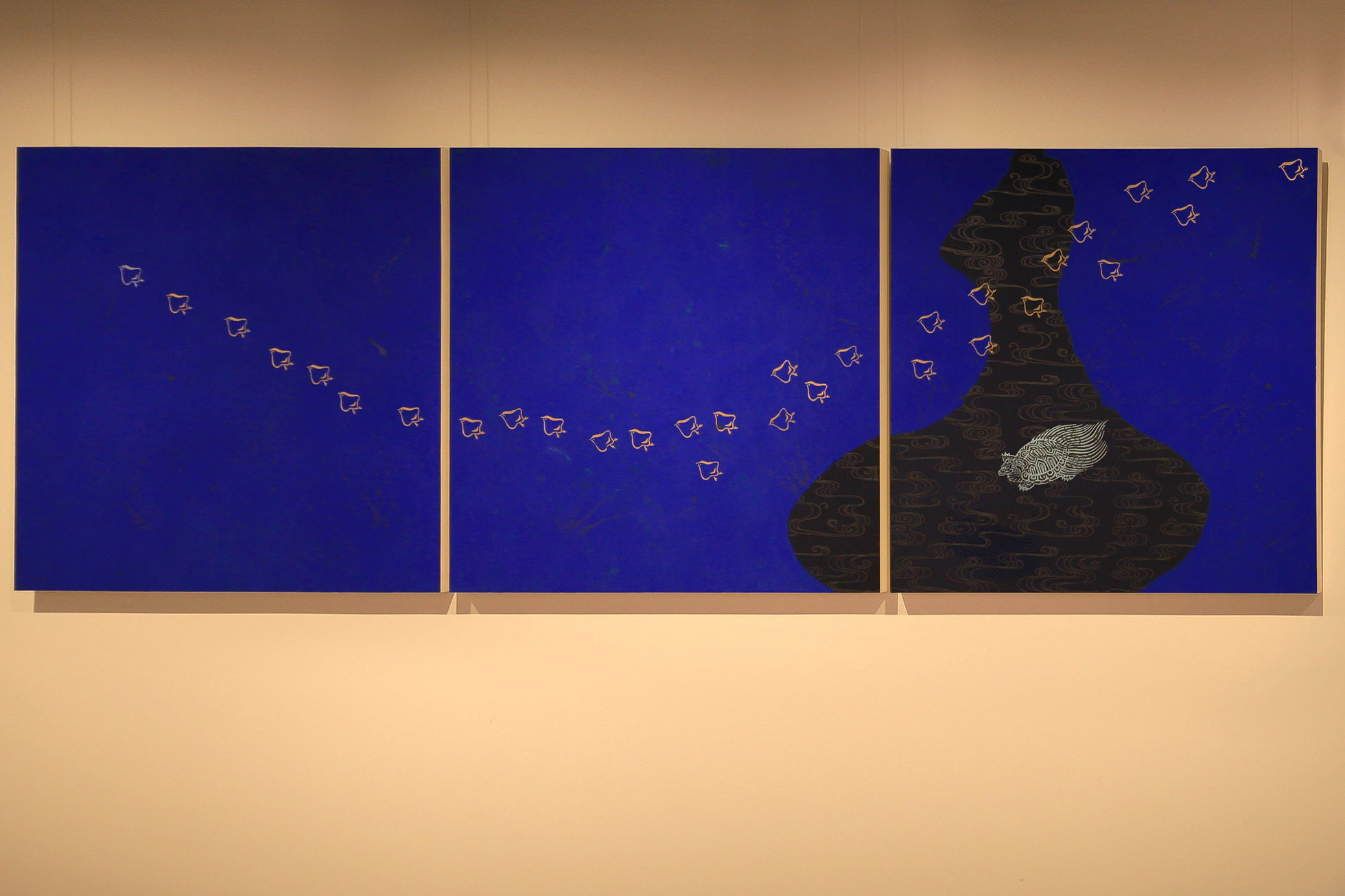
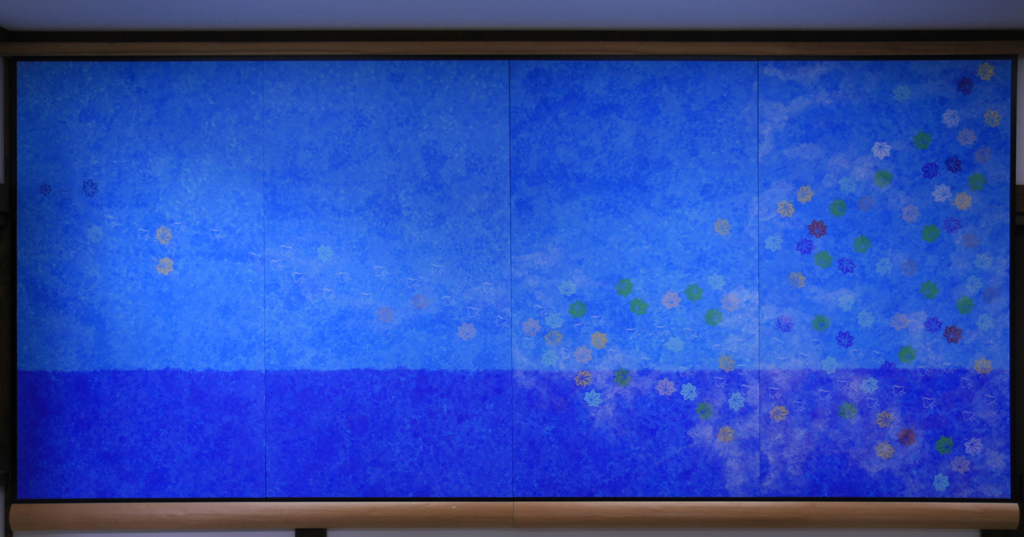
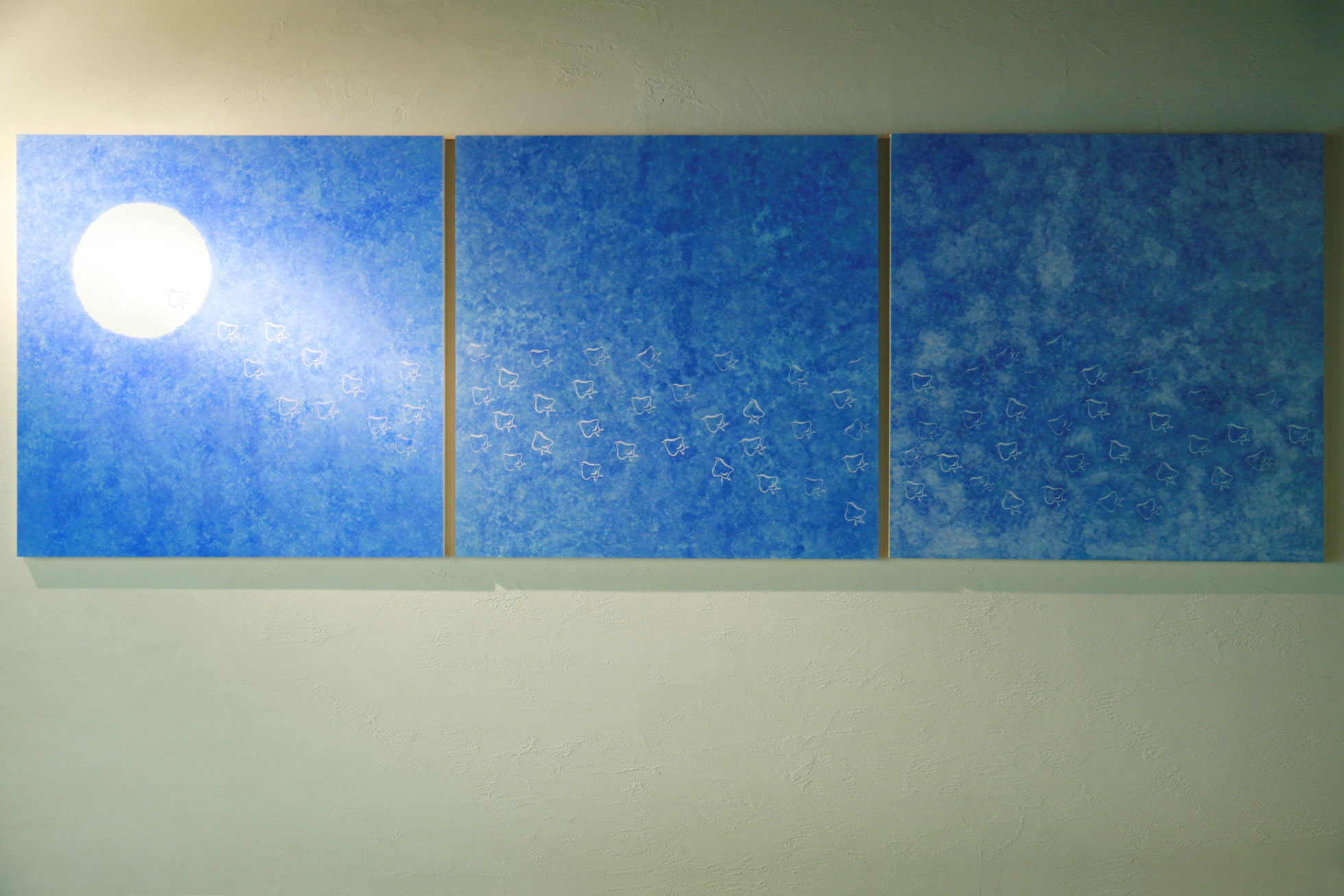
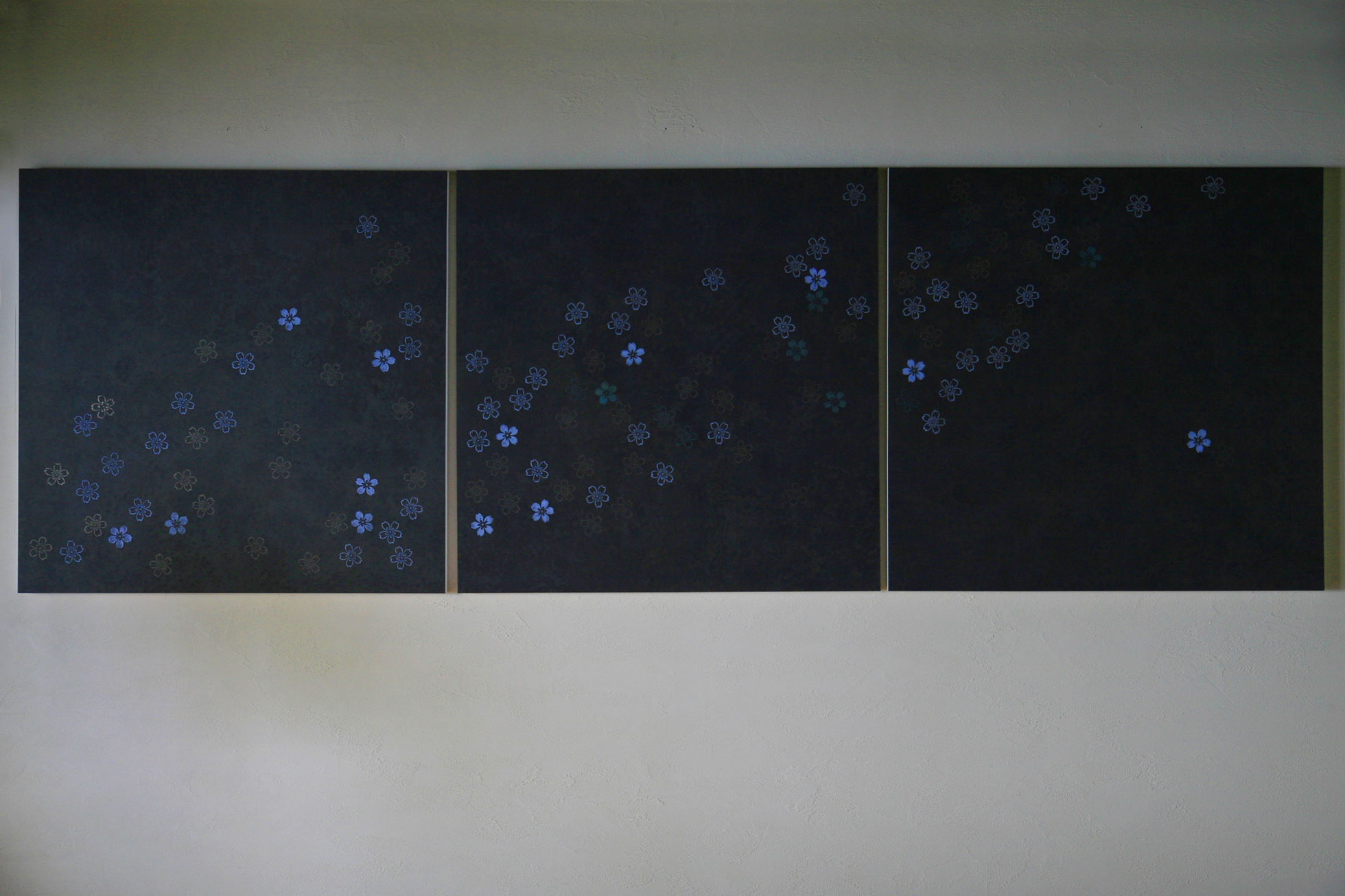
Karakami artist Choemon Senda has opened a new artistic field within the more than one-thousand-year history of karakami.
In 2008, he presented karakami for the first time in history as contemporary art, and since then has continued to pursue a path never before explored.
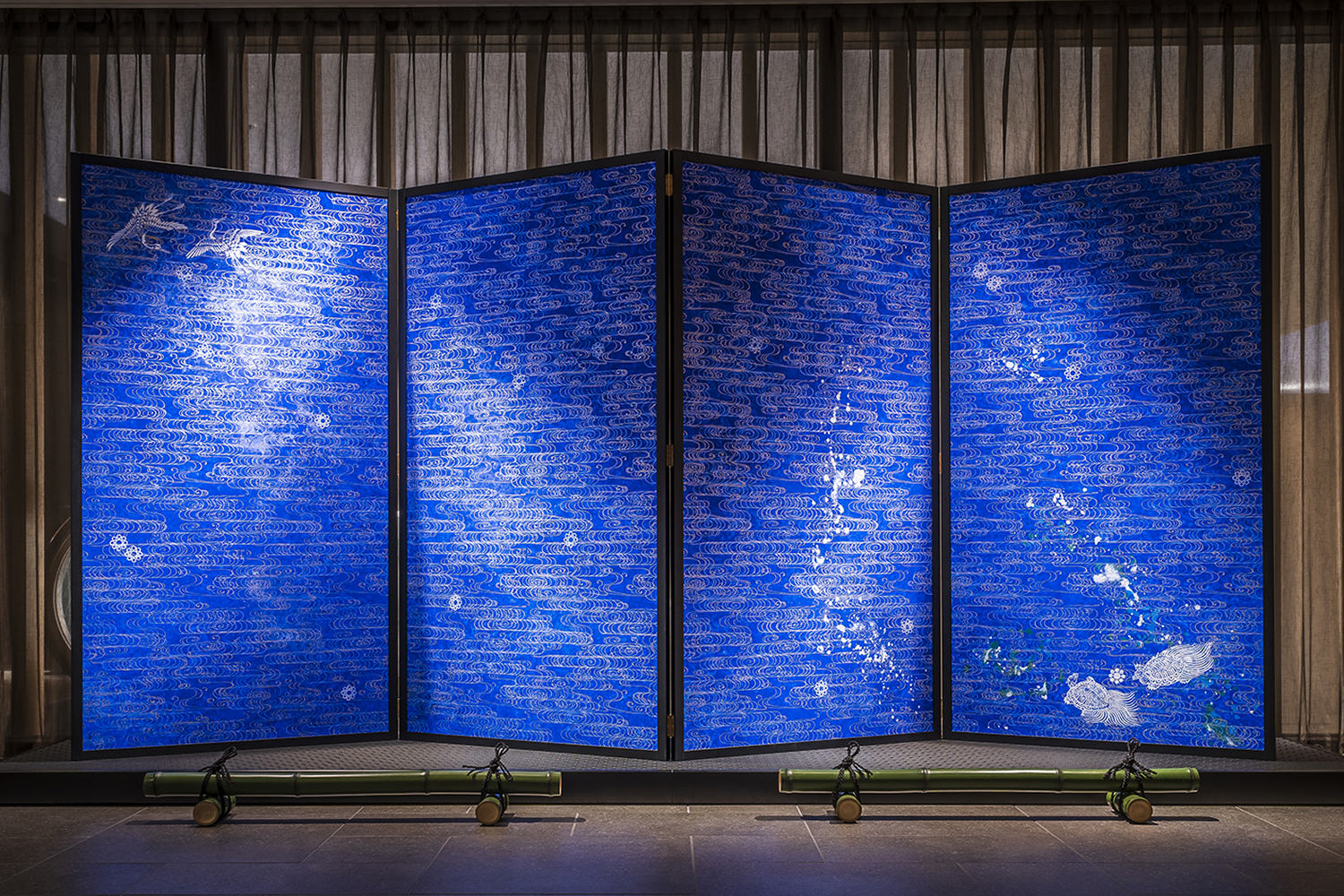
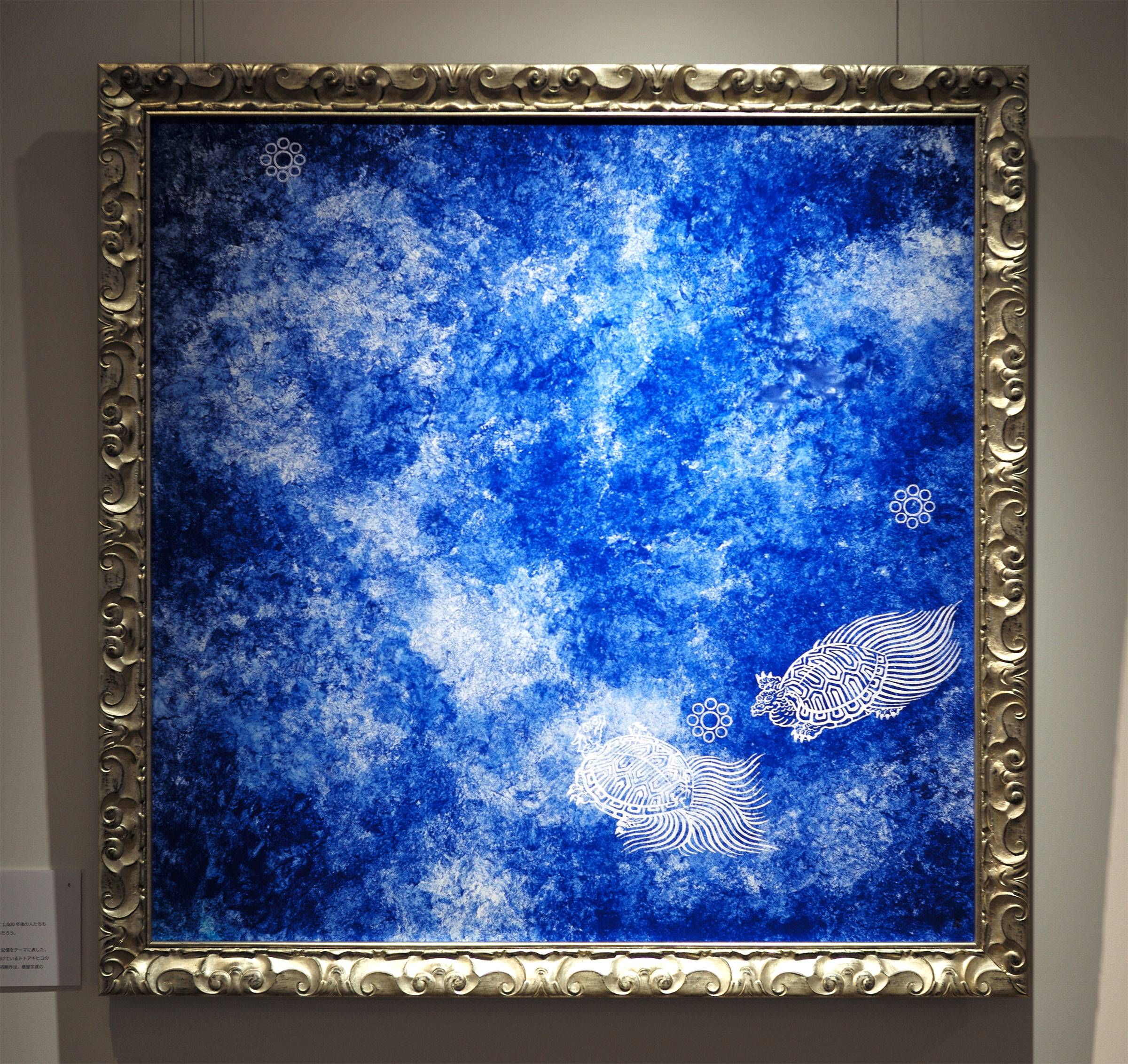
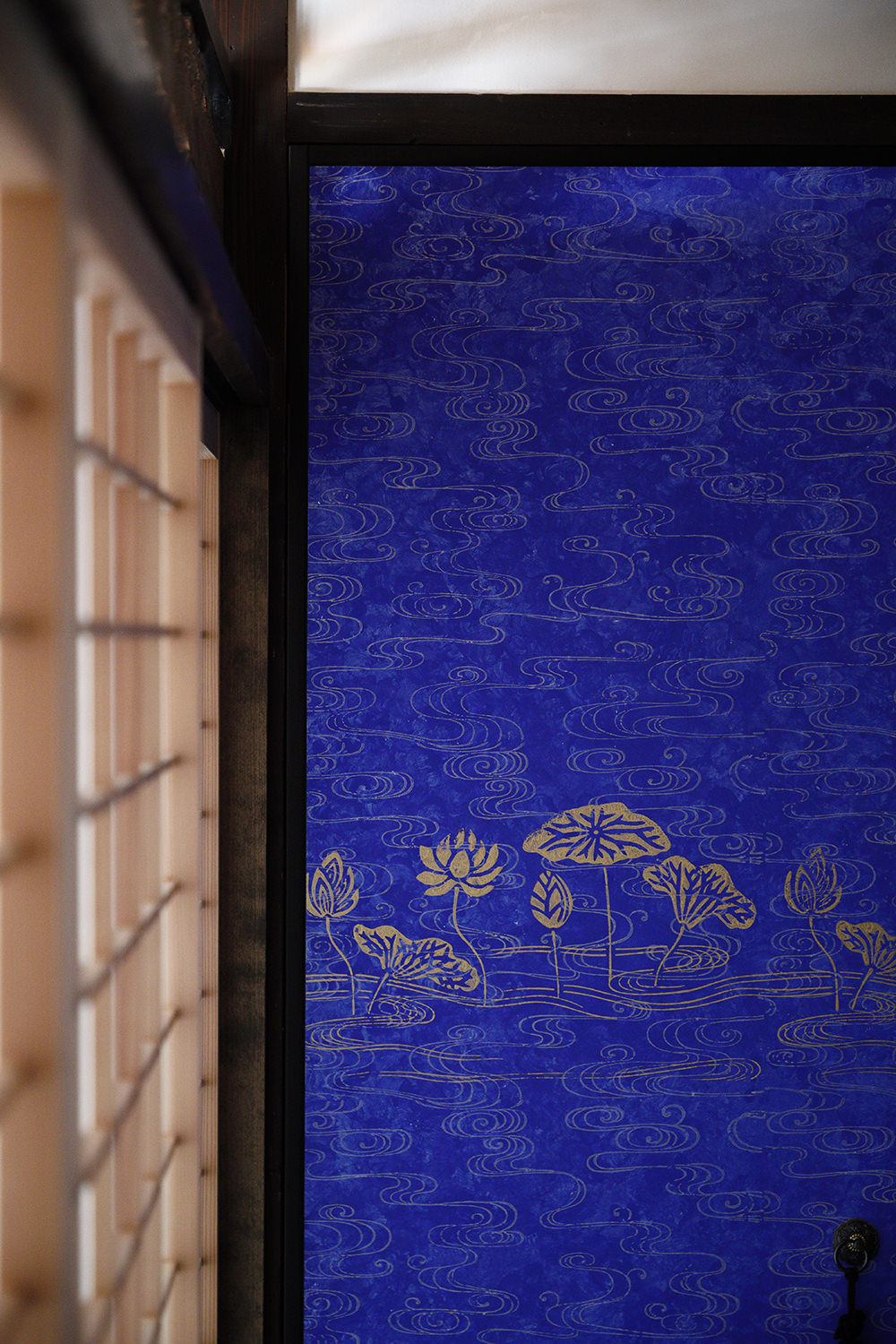
His works are created through a unique technique called “Shifuku-zuri,” in which Western pointillism and the Eastern technique of tarashikomi are brought together.
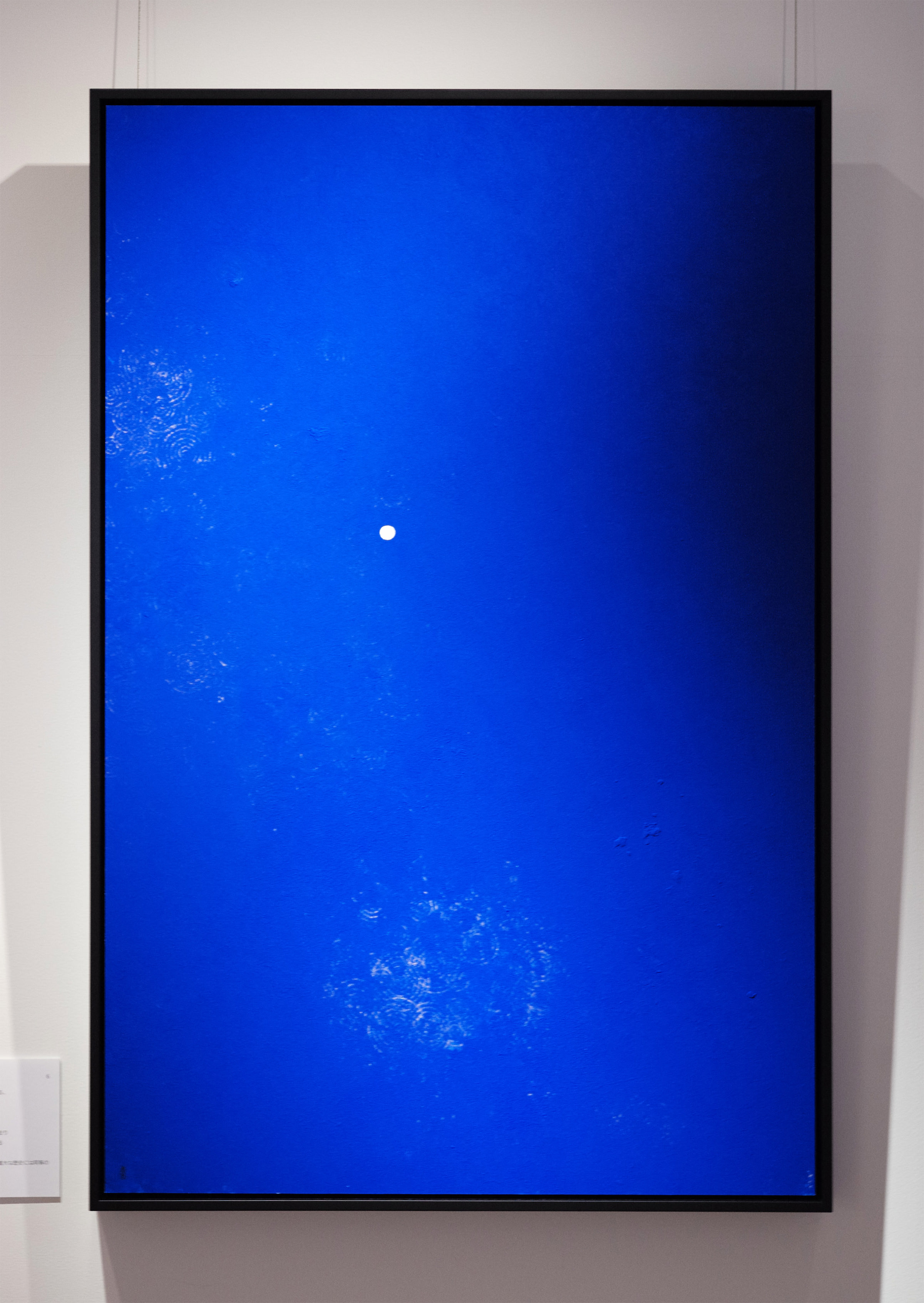
Using his own fingers, he applies color thousands and tens of thousands of times, gradually building layers of deep blue.
The profound world of blue that emerges from this process is rooted in the Buddhist philosophy that all things in nature can attain enlightenment.
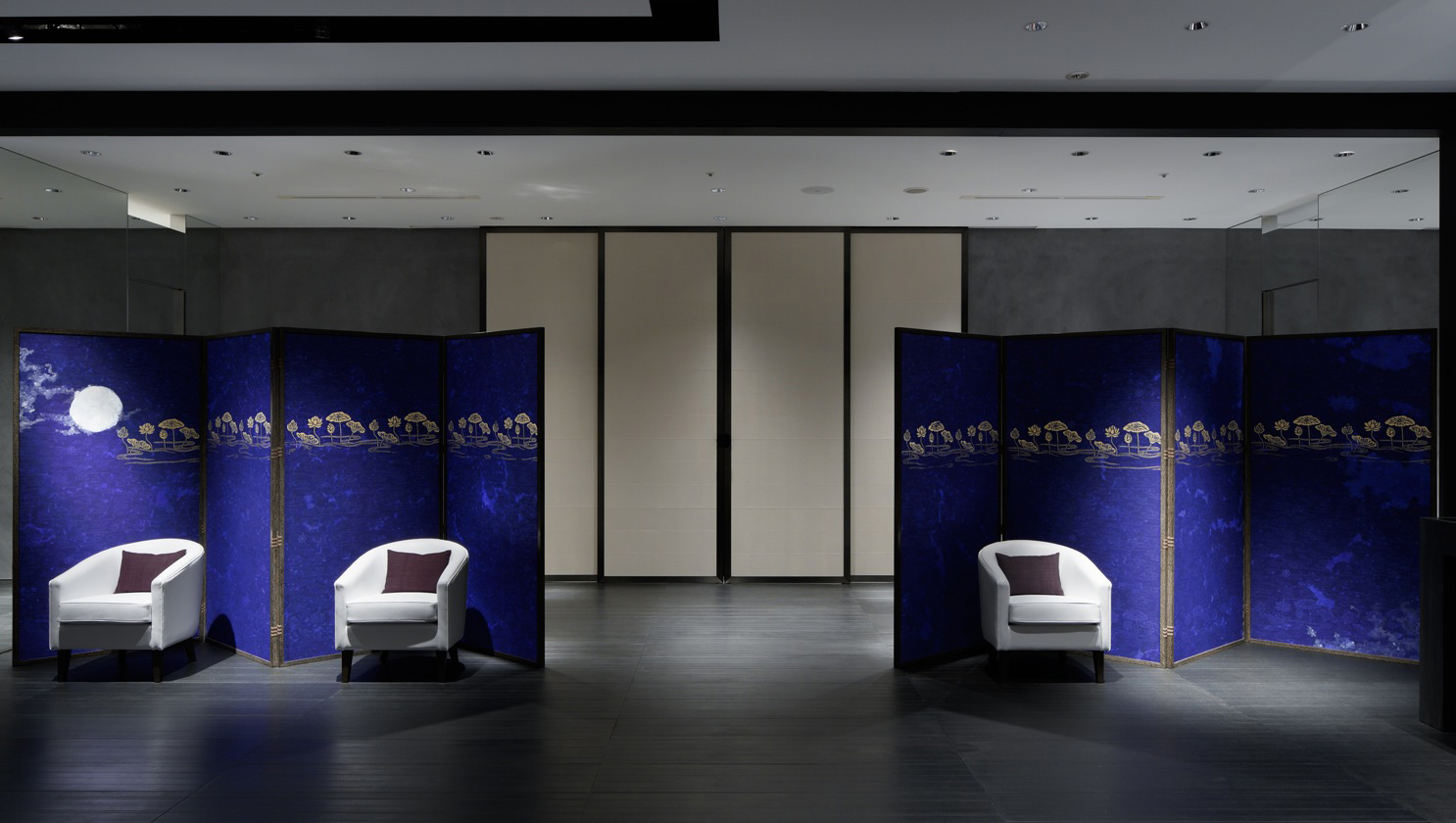
Infused with poetic spirituality and created in harmony with the countless deities and spirits of nature, this blue has come to be known as “Totoblue.”
Today, Choemon Senda is often referred to as the artist of blue, and his works are widely known as “Totoblue,” a spiritual blue born from prayer and nature.

Poetic art
Layering patterns to turn the message into poetry
Choemon Senda (Toto Akihiko) is also engaged in attempting to create new messages by unleashing the latent power contained within patterns.
In Toto’s own words,
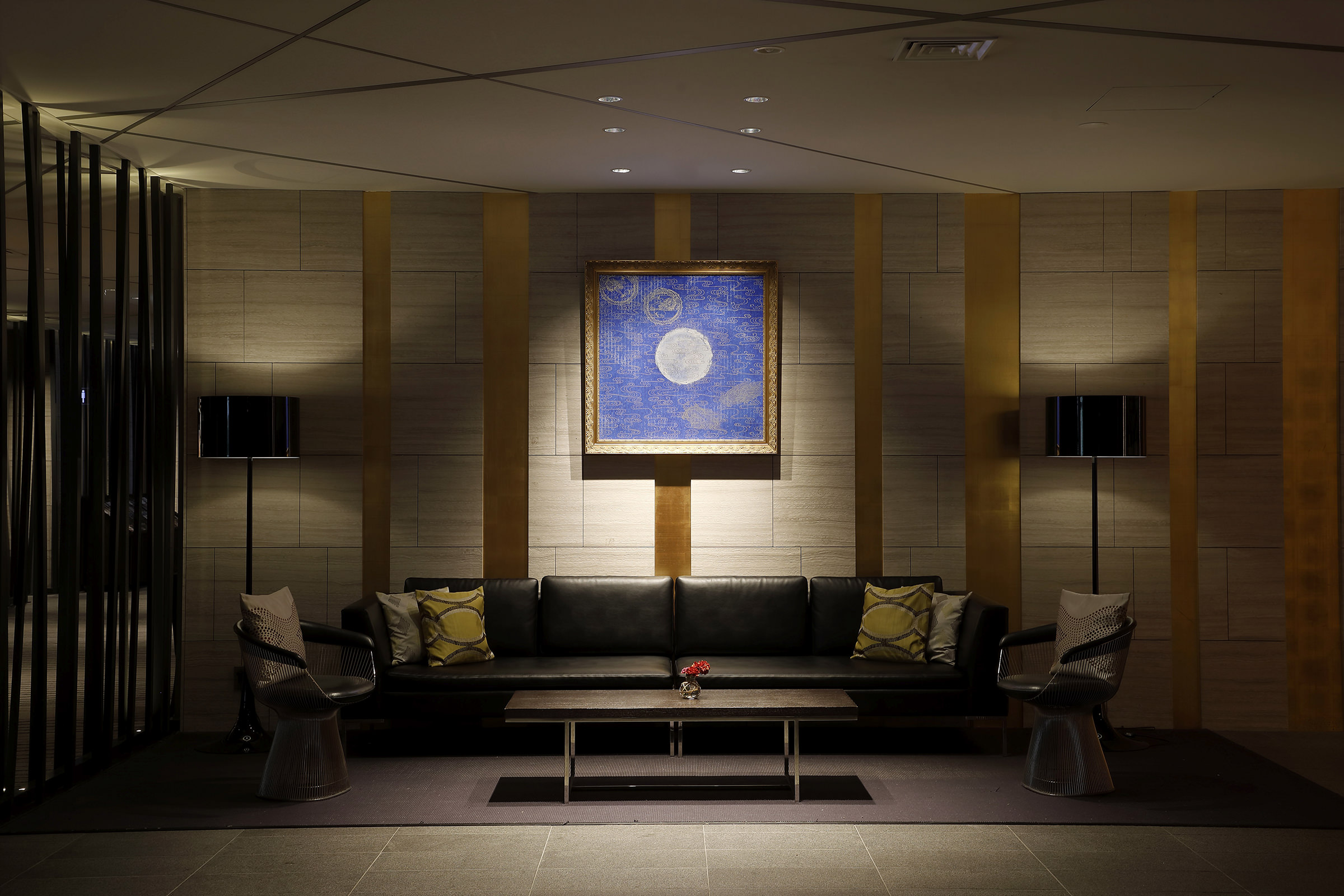
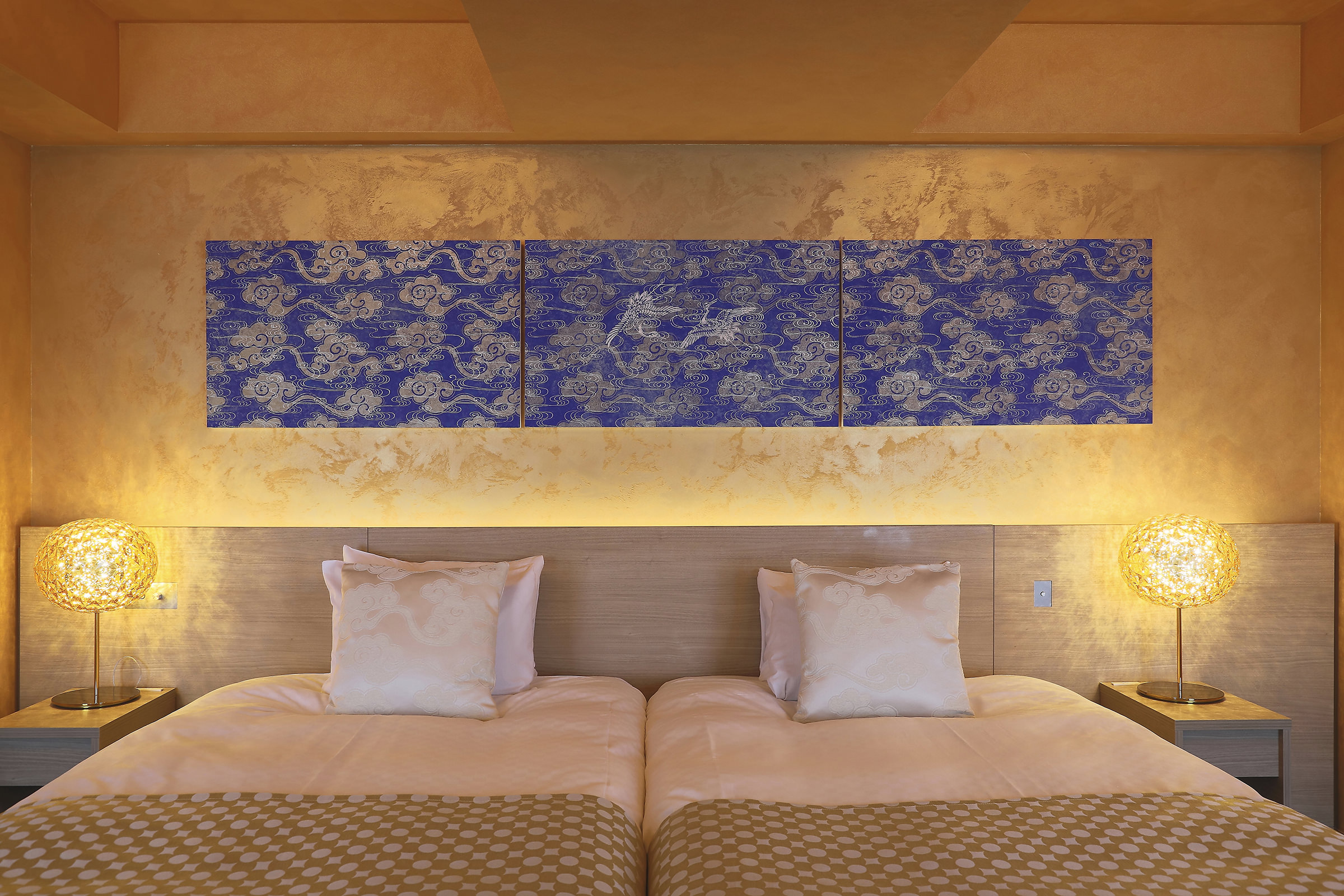
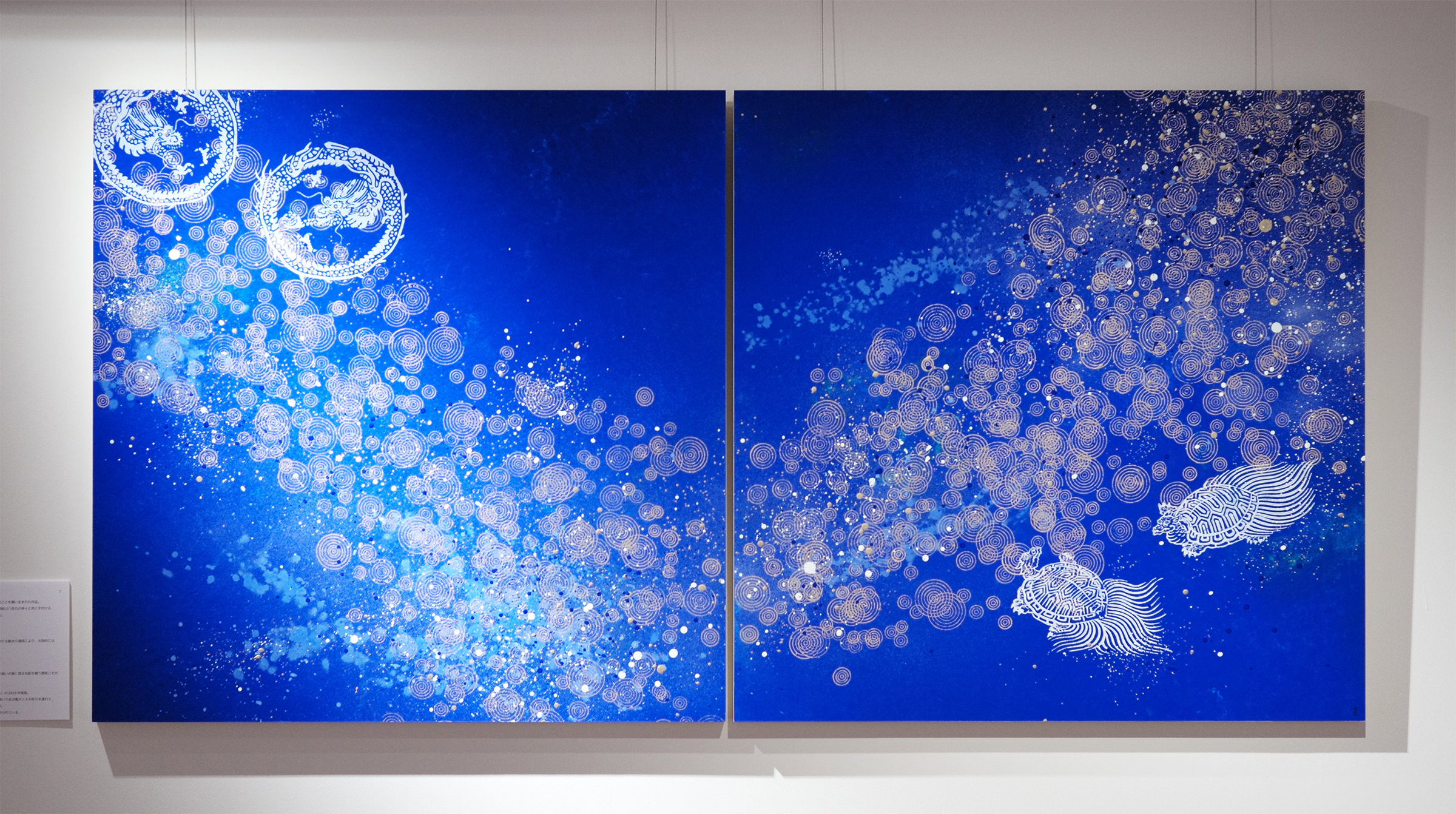
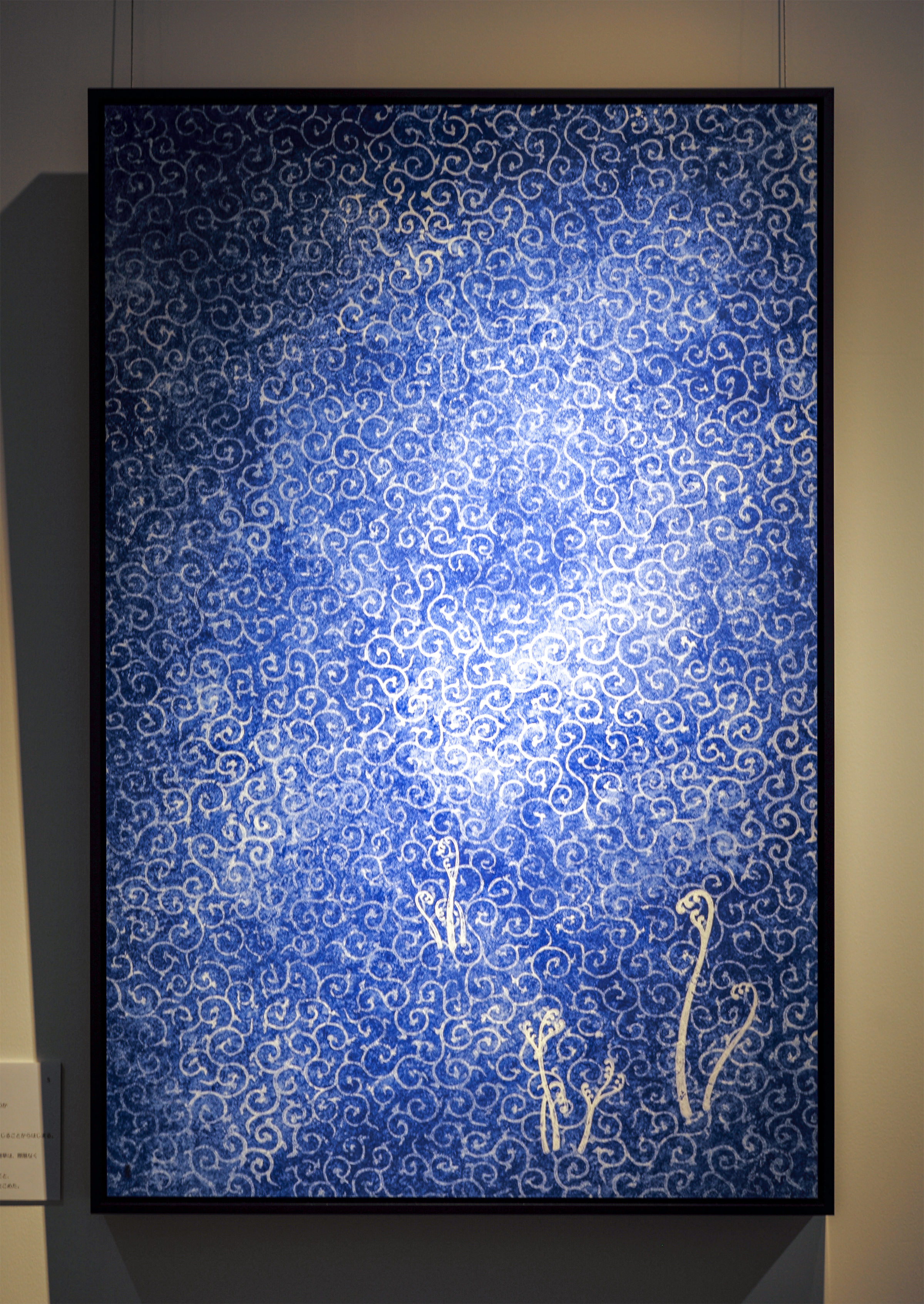
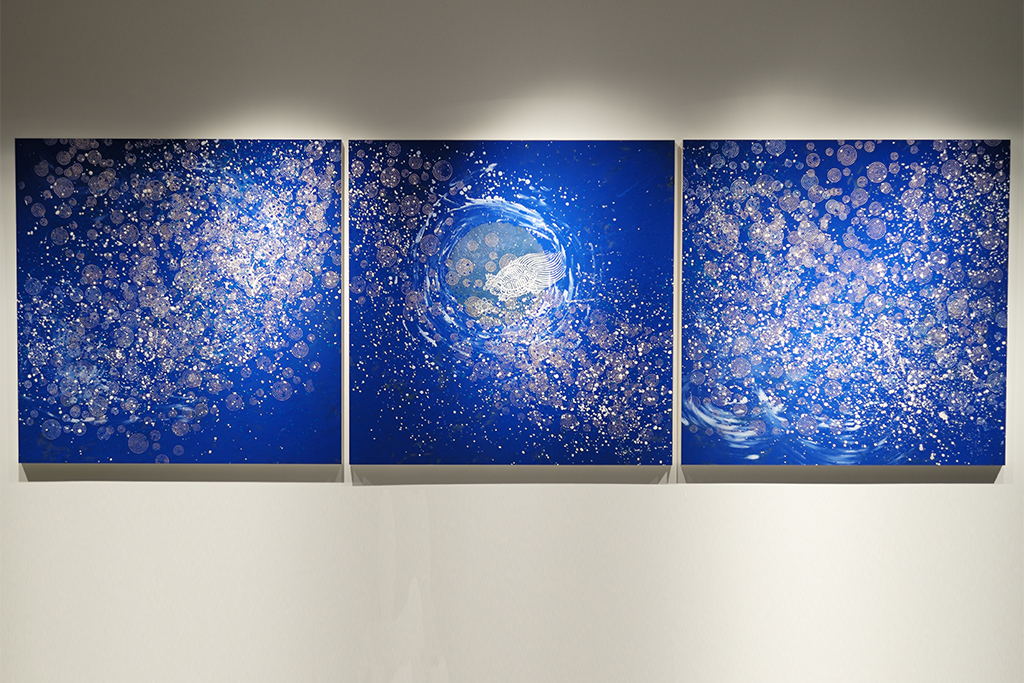
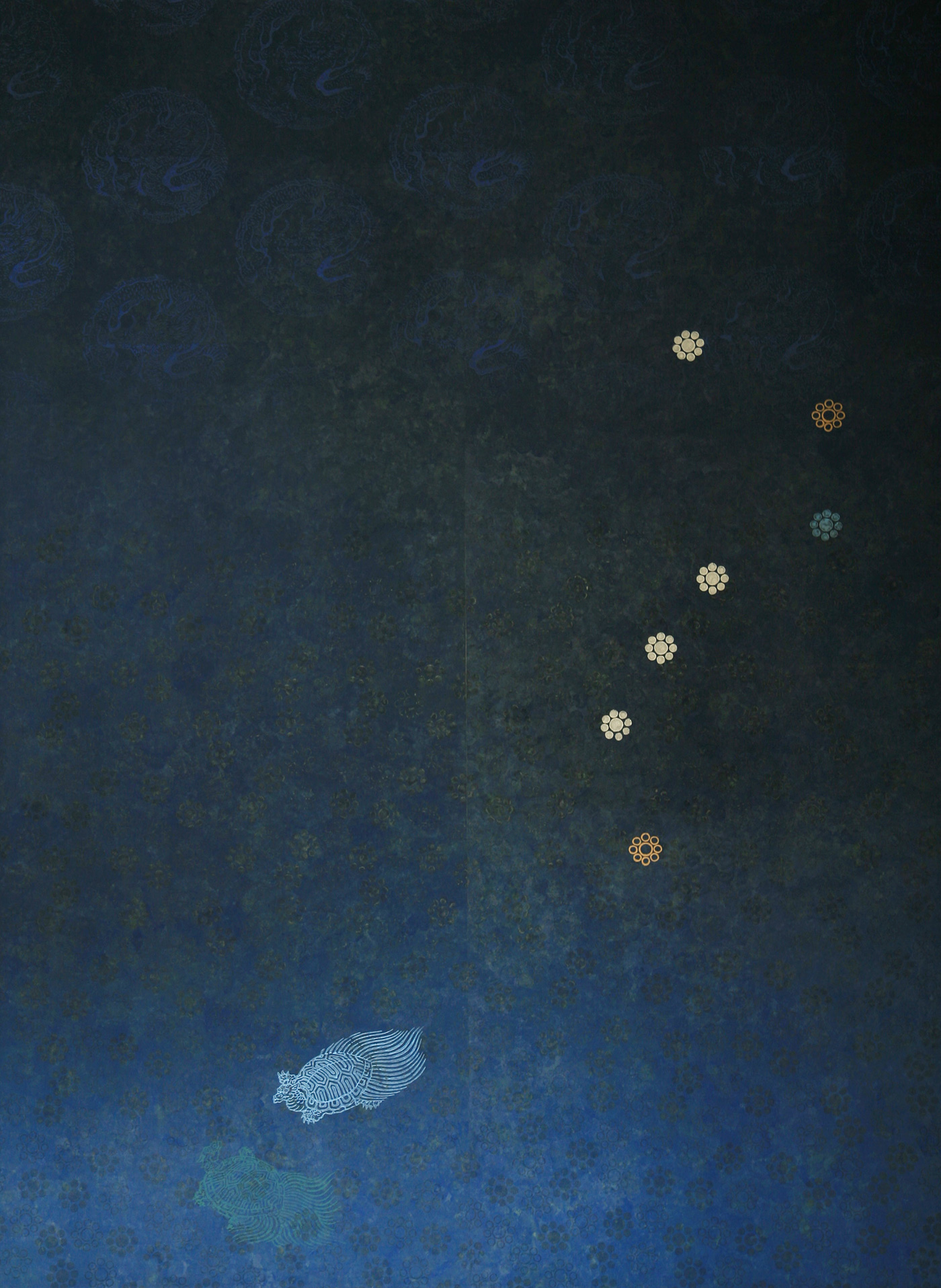
"Conventional karakami uses patterns to express flowing water as flowing water, stars as stars, and dragons as dragons. What I have done is to place stars on the surface of the water and depict a dragon on top of that to create my piece 'Hoshi ni Negai o (Wish Upon a Star).' The whirlpool karakami introduces change to regularity, with randomly positioned spirals symbolizing energy, giving it an undulating appearance and transforming the inconsistent expression of the paint into its defining characteristic. I believe that this karakami piece sought to be born from a state of self-renunciation. To intend the unintended, I felt that I was creating it together with Mizuhanome, the god of water, and I therefore named it Mizuha. I wanted to imbue poetry and a poetic sentiment to karakami by layering patterns that are neither abstract nor figurative to connect meaning to meaning and tell a story. Capturing the landscape of the heart on karakami was something that had never been attempted before."
Source: Toto Akihiko and Senda Aiko. Jinsei wo Irodoru Monyo [The Patterns That Color Life] (Kodansha, 2020)

Blue Artist — Choemon Senda
Totoblue — The Sacred Blue
Nine Definitions of Totoblue / The Beauty of Yugen
The Beauty of Yugen
1. A presence — something hidden yet felt
2. Shadows in quiet fluctuation
3. Subtle, indistinct, beyond definition
4. Depth beyond measure
5. A lingering resonance
6. Stillness
7. A sense of prayer
8. Unconformity
9. Incomplete — the viewer completes the work
Totoblue
Totoblue is the sacred blue born from prayer.
It is the spiritual philosophy at the heart of Choemon Senda’s work.
Rooted in nature and the unseen world, Totoblue embodies a quiet yet profound presence that transcends time.
Choemon Senda’s work is created through a unique technique, Shifuku-zuri,
which fuses Western pointillism with the Eastern technique of tarashikomi.
Using his own fingers, he applies color thousands upon thousands of times,
layering blue into a deep, living expression.
This blue is not merely a color.
It is a state of being—
a resonance of prayer, nature, and presence.
Totoblue is a sacred blue that carries prayer into the future.

Profile
Blue Artist
Sacred Blue born from prayer
Choemon Senda(formerly Toto Akihiko)
Choemon Senda is a karakami artist who pioneered karakami as contemporary art.
He is widely regarded as the pioneer who established karakami as contemporary art.
Pursuing the artistic potential of karakami, he developed a unique technique called “Shifuku-zuri,” in which Western and Eastern painting methods are fused and color is applied with his own fingers.
The profound blue karakami works born from this process are known as “Totoblue,” a spiritual blue imbued with poetic presence, created in harmony with the countless deities and spirits of nature. This sacred blue unfolds a distinctive world and narrative unlike any other.
In 2010, his work “Inochi” was acquired and exhibited by MIHO MUSEUM, becoming the first karakami work in history to be recognized as a museum piece. In 2014, he held the first exhibition in history dedicated to karakami art at the Mitsuo Aida Museum in the Tokyo International Forum.
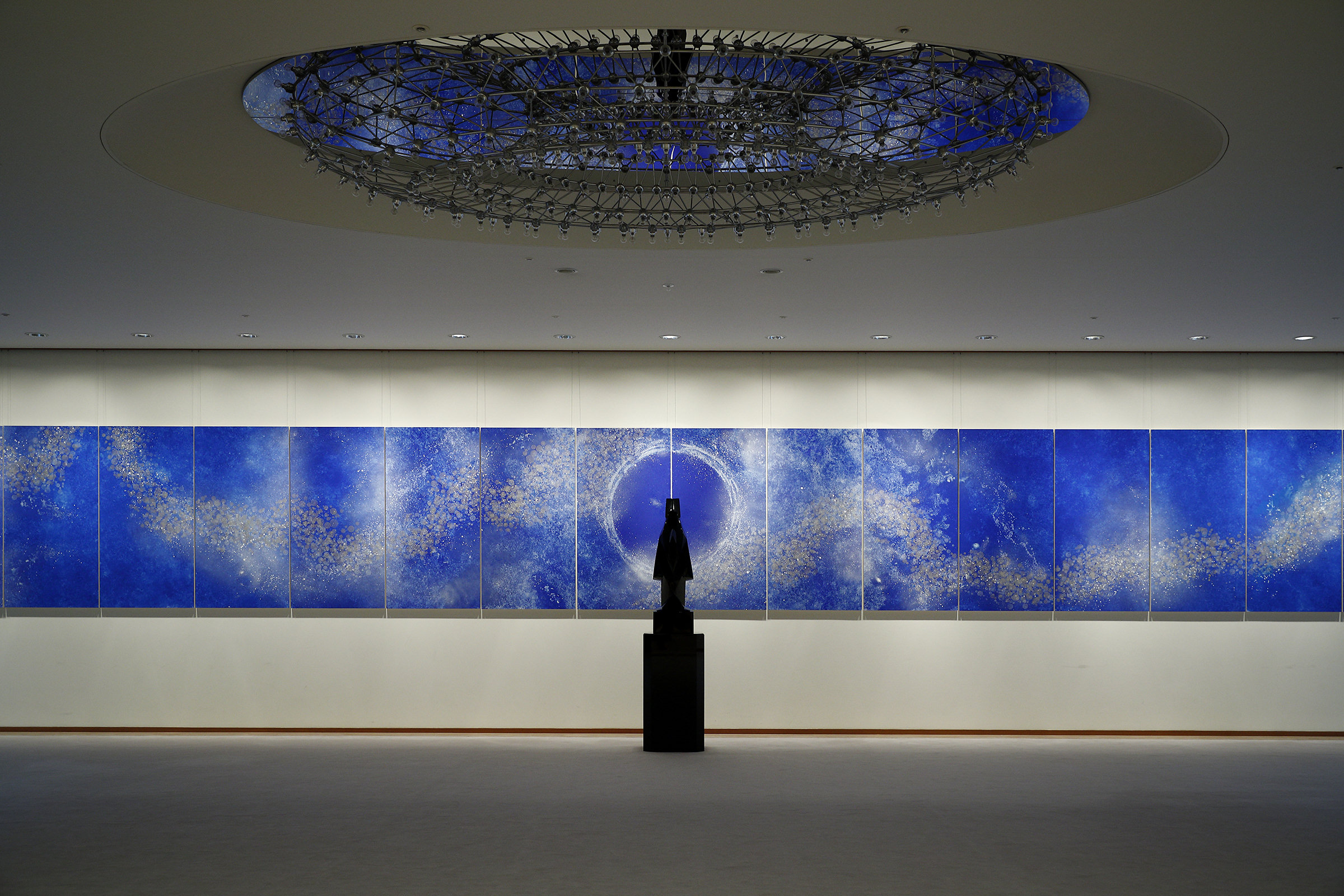
In 2020, he created the monumental 22-meter karakami artwork “Universal Symphony,” themed around prayers for world peace. This largest karakami artwork ever produced was also collected and exhibited by a museum.
His artwork “Wish Upon a Star,” dedicated to the historic temple Yogen-in, is displayed alongside the Important Cultural Property “Chinese Lions” by Tawaraya Sotatsu. He also undertook the karakami restoration of the Important Cultural Property “Pine Trees” by Tawaraya Sotatsu in the same temple.
He has produced karakami for historic sites including Myōhōin Monzeki, the head temple of Sanjūsangendō, the scenic garden Murin-an, and Goō Shrine. While inheriting the traditional patterns of karakami that date back to the Heian period, he simultaneously breaks beyond these conventions. Through his reinterpretation, he has opened an unprecedented path in the world of karakami as contemporary art.
In July 2018, he proposed a cultural initiative to leave a spiritual legacy for Kyoto one hundred years into the future, launching the “100 Patterns of the Heisei Era Project” (now the “100 Patterns of the Heisei and Reiwa Eras Project”). This project introduces one hundred new woodblocks to join the more than 600 historic woodblocks passed down through generations since the Edo period, shaping a new chapter in the history of Karacho.
In July 2011, he revived the title “Karakami Artist (Karakami-shi)” in order to revitalize karakami culture.
In 2024, marking the 400th anniversary of Karacho, he inherited the historic name Choemon Senda, a title that had remained unused since the eighth generation and was revived for the first time in nearly a century.
His works are held in museum collections and historic sites in Japan, and continue to expand the cultural language of karakami as contemporary art.